World Heritage Identification Number: 1215
World Heritage since: 2006
Category: Cultural Heritage
WHE Type: Infrastructure & Industry
Transboundary Heritage: No
Endangered Heritage: No
Country: 🇬🇧 United Kingdom of Great Britain and Northern Ireland
Continent: Europe
UNESCO World Region: Europe and North America
Map
The Cornwall and West Devon Mining Landscape: A Testament to the Industrial Revolution
The Cornwall and West Devon Mining Landscape, inscribed as a UNESCO World Heritage Site in 2006, offers a unique insight into the industrial revolution that swept through Britain during the 18th and 19th centuries. This region, located in the southwest of England, played a pivotal role in the global mining industry, particularly in the production of copper.
More to come…UNESCO Description of the World Heritage Site
Much of the landscape of Cornwall and West Devon was transformed in the 18th and early 19th centuries as a result of the rapid growth of pioneering copper and tin mining. Its deep underground mines, engine houses, foundries, new towns, smallholdings, ports and harbours, and their ancillary industries together reflect prolific innovation which, in the early 19th century, enabled the region to produce two-thirds of the world’s supply of copper. The substantial remains are a testimony to the contribution Cornwall and West Devon made to the Industrial Revolution in the rest of Britain and to the fundamental influence the area had on the mining world at large. Cornish technology embodied in engines, engine houses and mining equipment was exported around the world. Cornwall and West Devon were the heartland from which mining technology rapidly spread.
UNESCO Justification of the World Heritage Site
Criterion (ii): The development of industrialised mining in Cornwall and west Devon between 1700 and 1914, and particularly the innovative use of the high-pressure steam beam engine, led to the evolution of an industrialised society manifest in the transformation of the landscape through the creation of smallholdings, railways, canals, docks and ports, and the creation or remodelling of towns and villages. Together these had a profound impact on the growth of industrialisation in the United Kingdom, and consequently on industrialised mining around the world.
Criterion (iii): The extent and scope of the remains of copper and tin mining, and the associated transformation of the urban and rural landscapes presents a vivid and legible testimony to the success of Cornish and west Devon industrialised mining when the area dominated the world's output of copper, tin and arsenic.
Criterion (iv): The mining landscape of Cornwall and west Devon, and particularly its characteristic engine houses and beam engines as a technological ensemble in a landscape, reflect the substantial contribution the area made to the Industrial Revolution and formative changes in mining practices around the world.
Encyclopedia Record: Cornwall and West Devon Mining Landscape
The Cornwall and West Devon Mining Landscape is a World Heritage Site which includes select mining landscapes in Cornwall and West Devon in the south west of England. The site was added to the World Heritage List during the 30th Session of the UNESCO World Heritage Committee in Vilnius, July 2006. Following plans in 2011 to restart mining at South Crofty, and to build a supermarket at Hayle Harbour, the World Heritage Committee drafted a decision in 2014 to put the site on the List of World Heritage in Danger, but this was rejected at the 38th Committee Session at Doha, Qatar, in favour of a follow-up Reactive Monitoring Mission.Additional Site Details
Area: 19,719 hectares
Number of Components: 18
(iii) — Unique or exceptional testimony to a cultural tradition
(iv) — Outstanding example of a type of building or landscape
Coordinates: 50.1361111111 , -5.3836111111
Image
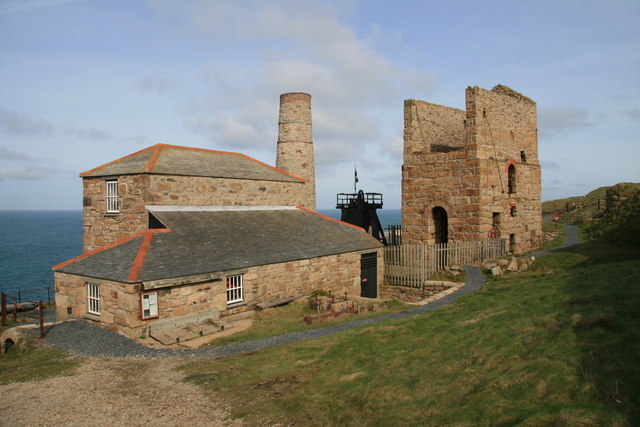
© John Gibson, CC BY-SA 2.0 Resized from original. (This derivative is under the same CC BY-SA license.)
World Heritage Research
Discover scientific research and academic studies that deepen our understanding of Cornwall and West Devon Mining Landscape from its history and significance to its conservation, management, and contemporary challenges.
-
Land adjacent to All Saints Park, St Ann's Chapel, Calstock, Cornwall: Heritage Impact Assessment
A proposed residential development near All Saints Park and St Ann's Chapel in Calstock, Cornwall, is unlikely to cause substantial harm to nearby heritage assets. The study, conducted by South West Archaeology Ltd., found that the development would have a negligible adverse effect on Grade II Listed Salters Farmhouse and non-designated Hingston Down, aligning with 'Less than Substantial Harm' criteria. Modern housing developments in the vicinity provide screening, reducing visual impact. Desk-based research and archaeological trenching suggested minimal risk of significant archaeological findings. The report recommends adhering to local design guidance and using vernacular materials sensitive to the Cornwall and West Devon Mining Landscape World Heritage Site.
Nock, A., Balmond, F., Boyd, N., & Morris, B. W. (2026). Land adjacent to All Saints Park, St Ann's Chapel, Calstock, Cornwall: Heritage Impact Assessment. Archaeology Data Service. https://doi.org/10.5284/1146062
View Publication Record | Read Publication -
Kit Hill Country Park, Callington, Cornwall: Archaeological Assessment and Management Plan
Kit Hill Country Park, part of the UNESCO World Heritage Site Cornwall and West Devon Mining Landscape, is identified as a significant location with numerous heritage assets of national and regional importance. The study reveals that the site's archaeological features, including Bronze Age burial monuments and medieval mining remnants, are under threat from vegetation overgrowth and high pedestrian traffic in popular areas. Conducted by Wessex Archaeology, this assessment combines earlier surveys, a 2015 field survey, and documentary research to prioritize conservation actions. The findings highlight the need for targeted interventions to preserve these heritage assets, pending resource availability.
Thornber, R., & Brennan, N. (2016). Kit Hill Country Park, Callington, Cornwall: Archaeological Assessment and Management Plan. Archaeology Data Service. https://doi.org/10.5284/1146241
View Publication Record | Read Publication -
North Hooe Mine, Bere Alston, Devon: Historic Building Recording
A historic building recording at North Hooe Mine, Devon, reveals the site's significance as part of Cornwall and West Devon Mining Landscape World Heritage Site. Despite being derelict since 1855, with buildings plundered by the late 19th century, the surviving structures—including a pumping engine house and smithy—retain key attributes that illustrate the mining landscape's evolution. The study, conducted prior to conservation efforts, documents these remains, which, though in poor condition, hold associative value tied to 19th-century metallurgist Percival Norton Johnson and later failed revivals. The only notable addition post-closure was a 1960s pump house, underscoring the site's historical-illustrative importance.
Morris, B. W. (2025). North Hooe Mine, Bere Alston, Devon: Historic Building Recording. Archaeology Data Service. https://doi.org/10.5284/1139756
View Publication Record | Read Publication -
Heritage Assessment at Trevarthian Farm
A heritage assessment of the proposed Trevarthian Farm development in Cornwall and West Devon Mining Landscape found that its impact on nearby heritage assets, including Grade II-listed buildings and the World Heritage Site, would be minor. The study, conducted by B. Morris, F. Balmond, and A. Nock, used desk-based research and site inspections (January 15, 2024) following SWARCH HIA methodology. While visual effects on the Church of St Hilary (Grade I) and the broader landscape were noted, most designated assets were sufficiently distant or shielded by topography to mitigate harm. The assessment concluded that the scheme’s adverse impact would be no greater than minor, with negligible effects on most heritage resources.
Morris, B. W., Balmond, F., & Nock, A. (2025). Heritage Assessment at Trevarthian Farm. Archaeology Data Service. https://doi.org/10.5284/1140725
View Publication Record | Read Publication -
Chapter 13 Hazards associated with mining and mineral exploitation in Cornwall and Devon, SW England
Cornwall and West Devon, the largest UNESCO World Heritage Site in the UK, present unique mining hazards due to its extensive metalliferous mining history spanning over 2000 years. The study identifies key risks linked to the region's distinctive geology, including steeply dipping mineral veins, deep and complex mine structures, and contamination from ore-processing by-products, particularly arsenic. Additionally, kaolin mining introduces hazards related to waste management and stable spoil tip maintenance. This research highlights the need for advanced heritage preservation techniques and remediation strategies to address these long-standing challenges, positioning Cornwall and Devon as leaders in mining hazard treatment.
Gamble, B., Anderson, M., & Griffiths, J. S. (2020). Chapter 13 Hazards associated with mining and mineral exploitation in Cornwall and Devon, SW England. Geological Society, London, Engineering Geology Special Publications, 29(1), 321–367. https://doi.org/10.1144/egsp29.13
View Publication Record | Read Publication