World Heritage Identification Number: 906
World Heritage since: 1999
Category: Cultural Heritage
WHE Type: Buildings & Architectural Ensembles
Transboundary Heritage: No
Endangered Heritage: No
Country: 🇷🇴 Romania
Continent: Europe
UNESCO World Region: Europe and North America
Map
Dacian Fortresses of the Orastie Mountains: A Testimony to Ancient Civilization
The Dacian Fortresses of the Orastie Mountains, located in Transylvania, Romania, offer a unique glimpse into the rich history and culture of the ancient Dacian civilization that thrived in the region from the 1st century BC to the 1st century AD. Inscribed as a UNESCO World Heritage Site in 1999, these fortresses represent an extraordinary fusion of military and religious architectural techniques and concepts drawn from the classical world and the late European Iron Age.
Constructed in the murus dacicus style, the six fortresses—Sarmizegetusa Regia, Bănița, Căpâlna, Costești-Cetățuie, Costești-Blidaru, and Piatra Roșie—served as the nucleus of the Dacian Kingdom and played a crucial role during the Roman–Dacian Wars. Each fortress was strategically positioned within the Orastie Mountains, taking advantage of the natural terrain to provide strong defenses against potential invaders.
Sarmizegetusa Regia, the capital of the Dacian Kingdom, is the most famous and best-preserved of the six fortresses. It features a central citadel surrounded by defensive walls and terraces that enclose residential areas, sanctuaries, and public structures. Among its most notable features are the sacred precincts, which include circular and rectangular sanctuaries associated with Dacian religious practices and the worship of Zalmoxis, sometimes referred to as the “Sanctuaries of the God Zalmoxis”. These structures show a blend of indigenous Dacian and Greek architectural influences.
Costești-Blidaru, another significant fortress, is situated on a rocky plateau and consists of two main defensive sections, including an inner citadel and an outer enclosure. The inner citadel contains several structures believed to have served military and residential purposes, while the elevated position of the fortress provides commanding views of the surrounding landscape.
The remaining fortresses—Bănița, Căpâlna, Costești-Cetățuie, and Piatra Roșie—each display distinctive characteristics that reflect the ingenuity and adaptability of the Dacian builders. For example, the Costești fortresses combine religious and military functions, while Piatra Roșie features complex stone fortifications adapted to steep terrain.
The Dacian Fortresses of the Orastie Mountains were ultimately conquered by the Romans at the beginning of the 2nd century AD, following Emperor Trajan’s campaigns, marking the end of Dacian independence. The dramatic fall of these strongholds and the key events of the conflict are famously immortalized in the intricate reliefs of Trajan’s Column in Rome, which serves as a vital visual record of the Roman victory. Nevertheless, the extensive archaeological remains of these fortresses continue to captivate visitors, offering vivid insight into a sophisticated and resilient civilization that once flourished in this mountainous region of Europe.
To sum up, the Dacian Fortresses of the Orastie Mountains serve as a testament to the ingenuity, resilience, and cultural achievements of the ancient Dacian people. These remarkable structures not only provide valuable insights into the history and architecture of the period but also offer a sense of awe and wonder that continues to inspire visitors today. As such, they rightfully deserve their place among the world's most significant historical sites.
UNESCO Description of the World Heritage Site
Built in the 1st centuries B.C. and A.D. under Dacian rule, these fortresses show an unusual fusion of military and religious architectural techniques and concepts from the classical world and the late European Iron Age. The six defensive works, the nucleus of the Dacian Kingdom, were conquered by the Romans at the beginning of the 2nd century A.D.; their extensive and well-preserved remains stand in spectacular natural surroundings and give a dramatic picture of a vigorous and innovative civilization.
UNESCO Justification of the World Heritage Site
Criterion (ii): The Dacian fortresses represent the fusion of techniques and concepts of military architecture from inside and outside the classical world to create a unique style.
Criterion (iii): The Geto-Dacian kingdoms of the late 1st millennium BC attained an exceptionally high cultural and socio-economic level, and this is symbolized by this group of fortresses.
Criterion (iv): The hill-fort and its evolved successor, the oppidum, were characteristic of the Late Iron Age in Europe, and the Dacian fortresses are outstanding examples of this type of defended site.
Encyclopedia Record: Dacian Fortresses of the Orăștie Mountains
Built in murus dacicus style, the six Dacian Fortresses of the Orăștie Mountains, in Romania, were created in the 1st centuries BC and AD as protection against Roman conquest, and played an important role during the Roman–Dacian wars.Additional Site Details
Area: Not available
Number of Components: 6
(iii) — Unique or exceptional testimony to a cultural tradition
(iv) — Outstanding example of a type of building or landscape
Coordinates: 45.62305556 , 23.31194444
Image
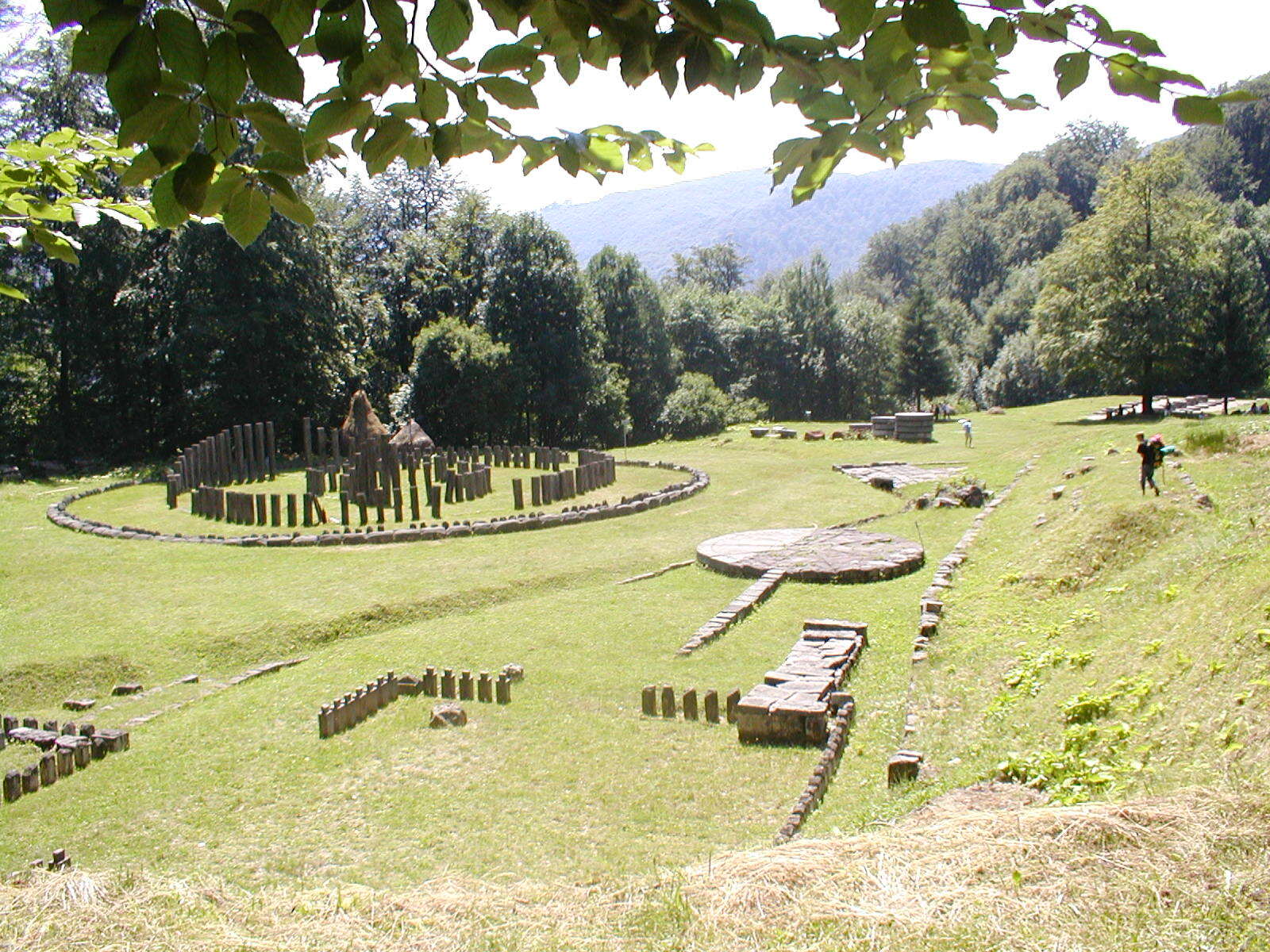
© FDominec, CC BY-SA 3.0 Resized from original. (This derivative is under the same CC BY-SA license.)
World Heritage Research
Discover scientific research and academic studies that deepen our understanding of Dacian Fortresses of the Orastie Mountains from its history and significance to its conservation, management, and contemporary challenges.
-
Dacian Fortresses in Orastie Mountains: Management of Heritage Structures
A comprehensive management strategy for the Dacian Fortresses of the Orastie Mountains, including three UNESCO World Heritage Sites, is proposed to address long-term neglect and environmental risks. The approach emphasizes a multidisciplinary conservation plan that integrates structural preservation with community engagement, while mitigating threats from climate change and unauthorized interventions. Challenges in developing an urban plan for the commune of Orastioara, Romania, are highlighted, alongside a framework for sustainable heritage management that balances aesthetic restoration with contextual authenticity.
Pașcu, G., Keller, A., & Bocan, C. (2021). Dacian Fortresses in Orastie Mountains: Management of Heritage Structures. 12th International Conference on Structural Analysis of Historical Constructions. https://doi.org/10.23967/sahc.2021.067
View Publication Record | Read Publication -
Dacic Ancient Astronomical Research in Sarmizegetuza
Research reveals that the Dacian Fortresses of the Orastie Mountains, particularly Sarmizegetusa Regia, served as astronomical observation shrines and solar calendars. The Great Circular Sanctuary, a key site in these mountains, was used for celestial observations and ritualistic purposes, suggesting an advanced understanding of astronomy among the Dacians. This study reinterprets the Dacian civilization's cosmogony by analyzing historical evidence and architectural features, challenging previous assumptions about their societal structures and beliefs.
Oprea, E. G., & Oprea, C. (2015). Dacic Ancient Astronomical Research in Sarmizegetuza. Proceedings of Conferences on the Dialogue between Science and Theology, 2, 226–230. https://doi.org/10.18638/dialogo.2015.2.1.24
View Publication Record | Read Publication