World Heritage Identification Number: 820
World Heritage since: 1997
Category: Natural Heritage
WHE Type: Protected Areas & National Parks
Transboundary Heritage: No
Endangered Heritage: No
Country: 🇨🇷 Costa Rica
Continent: Americas
UNESCO World Region: Latin America and the Caribbean
Map
Cocos Island National Park: A Biodiversity Hotspot in the Eastern Pacific
Cocos Island National Park, located approximately 550 kilometers off the Pacific coast of Costa Rica, is a unique and captivating destination that offers an extraordinary blend of terrestrial and marine biodiversity. This remote island, which is the only island in the tropical eastern Pacific with a tropical rainforest, was inscribed as a UNESCO World Heritage Site in 1997.
More to come…UNESCO Description of the World Heritage Site
Cocos Island National Park, located 550 km off the Pacific coast of Costa Rica, is the only island in the tropical eastern Pacific with a tropical rainforest. Its position as the first point of contact with the northern equatorial counter-current, and the myriad interactions between the island and the surrounding marine ecosystem, make the area an ideal laboratory for the study of biological processes. The underwater world of the national park has become famous due to the attraction it holds for divers, who rate it as one of the best places in the world to view large pelagic species such as sharks, rays, tuna and dolphins.
UNESCO Justification of the World Heritage Site
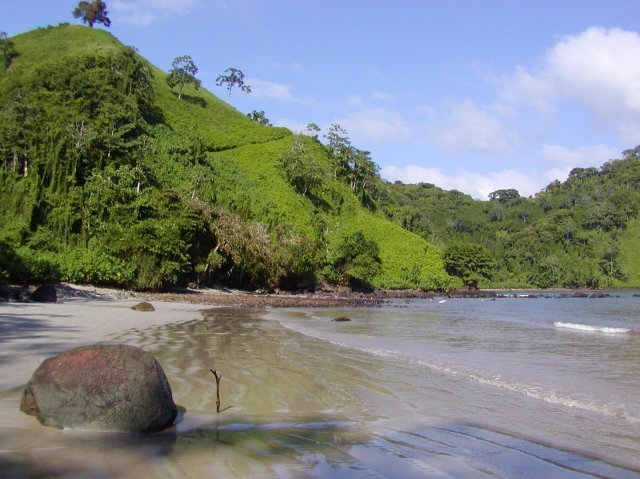
Criterion (ix): The property harbours a rare and complex mosaic of land and sea environments, including forested mountains, rivers, waterfalls, estuaries, cliffs, sandy and rocky beaches, bays, and extensive and highly diverse coral reefs and pelagic environments. The oceanic island, more than 500 kilometers off the continent, is mostly occupied by tropical rainforest and, from around 500 m.a.s.l. to the highest elevation at 634 m.a.s.l., by cloud forest. The isolation has been allowing ongoing evolutionary processes on land, giving origin to countless endemic species in the most diverse taxonomic groups, including several vertebrate species. The geographic location at the meeting point of the North Equatorial Countercurrent with other major marine currents and the ecological interactions between a remote island and the surrounding marine ecosystems are of major scientific importance. The currents and the island affect the movements and distribution of the many migratory marine species aggregating for feeding and reproduction in the waters around the island. The property serves as a dispersion centre of larvae of numerous marine species coming from the entire Pacific. The islets and rocks around the main island are reported to also serve as important cleaning stations, i.e. pelagic species aggregate to have parasites removed by specialised fish and other species.
Criterion (x): The small island supports the only tropical forest ecosystem located on an oceanic island within the Tropical Eastern Pacific. It is home to some 70 endemic species of vascular plants and several endemic animals, including three birds, two reptiles and even two freshwater fish. Smaller satellite rocks around the island support nesting and resting habitats for numerous migratory and resident bird species. However, the main species conservation value derives from critical marine habitat and the corresponding role of the property in the conservation of large pelagic species, especially several species of sharks. Among the latter are exceptional aggregations of the near-threatened Silky and Lemon Shark, the vulnerable Bigeye Thresher Shark and Galapagos Shark, the emblematic and endangered Hammerhead Shark, as well as White-tip Reef Shark and Black-tip Shark. Among some 300 recorded fish species are important aggregations of large pelagic fish, such as the vulnerable Whale Shark and Blue Marlin, as well as Sailfish Broadbill Swordfish, Shortbill Spearfish, Giant Manta Ray and Pelagic Stingray. Blue Whale and Bottlenose Dolphin are among the visiting marine mammals.
Encyclopedia Record: Cocos Island
Cocos Island is a volcanic island in the Pacific Ocean administered by Costa Rica, approximately 550 km southwest of the Costa Rican mainland. It constitutes the 11th of the 15 districts of Puntarenas Canton of the Province of Puntarenas. With an area of approximately 23.85 km2 (9.21 sq mi), the island is roughly rectangular in shape. It is the southernmost point of geopolitical North America if non-continental islands are included, and the only landmass above water on the Cocos tectonic plate.Additional Site Details
Area: 199,700 hectares
Number of Components: 1
(x) — Contains most important habitats for biodiversity
Coordinates: 5.533333333 , -87.06666667
IUCN World Heritage Outlook
The 2025 Conservation Outlook on Cocos Island National Park reports the following assessment:
Source: International Union for Conservation of Nature (IUCN) · View assessment
World Heritage Research
Discover scientific research and academic studies that deepen our understanding of Cocos Island National Park from its history and significance to its conservation, management, and contemporary challenges.
-
Bottlenose dolphin (Tursiops truncatus) aggregations at Cocos Island National Park, Puntarenas, Costa Rica, between 2017-2022
Research on bottlenose dolphin (Tursiops truncatus) aggregations at Cocos Island National Park, Costa Rica, from 2017 to 2022 reveals that the northeastern and southwestern quadrants serve as critical feeding grounds, likely due to high productivity near seamounts. The study found no significant seasonal or annual differences in sightings but noted an increase in individuals per group during 2020-2021, possibly linked to reduced human activity during the COVID-19 pandemic. While juveniles and pups were consistently present until 2022, their absence that year suggests potential shifts in habitat use or population dynamics. The research used systematic monitoring via the PRONAMEC protocol, dividing the park into quadrants and analyzing group composition, location, and seasonality to inform conservation strategies for this remote yet ecologically vital marine area.
Fernández, S., Ulate, K., & Golfín, G. (2025). Bottlenose dolphin (Tursiops truncatus) aggregations at Cocos Island National Park, Puntarenas, Costa Rica, between 2017-2022. https://doi.org/10.5194/oos2025-911
View Publication Record | Read Publication -
Microplastic distribution in the marine and freshwater ecosystems of Cocos Island National Park, Costa Rica
A uniform distribution of microplastics (MPs) around Cocos Island National Park, Costa Rica, suggests that local human activities are not significant sources of MP pollution. The study, which analyzed 288 samples from marine and freshwater ecosystems, identified 178 MPs, with higher abundance and larger sizes found in the marine environment. While ocean currents likely contribute to marine MP distribution, sources in the freshwater ecosystem remain uncertain but may stem from atmospheric deposition, air-sea exchange, or long-range transport. These findings highlight Cocos Island's vulnerability to plastic pollution due to its insular nature and underscore the need for global conservation efforts to address MPs as a planetary boundary threat.
Astorga, A., Ulate, K., Golfin-Duarte, G., Madrigal-Ramirez, D., Murillo-Corrales, M., García-Rojas, A., Arias-Zumbado, F., Solís-Adolio, D., & Chacón, I. (2025). Microplastic distribution in the marine and freshwater ecosystems of Cocos Island National Park, Costa Rica. IOP Conference Series: Earth and Environmental Science, 1474(1), 12019. https://doi.org/10.1088/1755-1315/1474/1/012019
View Publication Record | Read Publication -
Seamount aggregation effects for threatened species at Cocos Island National Park: Insights from a Long-Term Monitoring Framework in the Eastern Tropical Pacific
A long-term monitoring study from 2021 to 2024 at Cocos Island National Park revealed that seamounts, particularly the West Cocos and Gemelas seamounts, serve as critical aggregation sites for threatened pelagic species such as hammerhead sharks, thresher sharks, and silky sharks. The research found significantly higher abundance and diversity of these species near the seamount peaks compared to areas 10 nautical miles away, highlighting the localized biological importance of these underwater features. Hammerhead shark populations were particularly sensitive to environmental factors like water temperature, thermocline depth, and oxygen levels. This study provides a baseline for assessing the effectiveness of the expanded Cocos Island National Park and supports the establishment of a regional seamount monitoring initiative through the MigraMar network, aiming to protect these vulnerable species in the Eastern Tropical Pacific.
Cambra, M., Villalobos, F., Clarke, T., & Espinoza, M. (2025). Seamount aggregation effects for threatened species at Cocos Island National Park: Insights from a Long-Term Monitoring Framework in the Eastern Tropical Pacific. https://doi.org/10.5194/oos2025-1550
View Publication Record | Read Publication -
Microplastics found in the World Heritage Site Cocos Island National Park, Costa Rica
A comprehensive study reveals the widespread presence of microplastics (MPs) in both marine and freshwater environments of Cocos Island National Park, Costa Rica. MPs were detected in 93% of marine sediments, 20% of marine fish, and 51% of marine lobsters, with ocean currents, tourism, and illegal fishing gear identified as primary sources. Unexpectedly, MPs were also found in freshwater environments, including 32% of freshwater sediments, 20% of freshwater fish, and 15% of freshwater shrimps, though their origins remain unclear. The study employed a multi-faceted sampling approach, collecting sediment samples and biota from both marine and freshwater habitats using nonselective nets, fishing rods, cages, and scuba diving techniques.
Astorga, A., Montero-Cordero, A., Golfin-Duarte, G., García-Rojas, A., Vega-Bolaños, H., Arias-Zumbado, F., Solís-Adolio, D., & Ulate, K. (2022). Microplastics found in the World Heritage Site Cocos Island National Park, Costa Rica. Marine and Fishery Sciences (MAFIS), 35(3). https://doi.org/10.47193/mafis.3532022010907
View Publication Record | Read Publication -
The Terrestrial Reptiles of Australia's Island Territories [1983]
Australia's oceanic territories, including Cocos Island National Park, harbor diverse but understudied reptile faunas. A 1983 survey of Norfolk, Christmas, and Cocos (Keeling) Islands revealed distinct reptile compositions, distributions, and conservation needs across these remote Pacific and Indian Ocean islands. Conducted over two-week periods by the Australian National Parks and Wildlife Service, the study aimed to document the current status of terrestrial reptiles, identifying species richness, local abundance, and potential threats. Findings highlighted the unique herpetofaunal characteristics of these islands, emphasizing the need for targeted conservation efforts to protect their biodiversity.
Cogger, H., Sadler, R., & Cameron, E. (2022). The Terrestrial Reptiles of Australia's Island Territories [1983]. figshare. https://doi.org/10.6084/M9.FIGSHARE.20022902
View Publication Record | Read Publication -
Approximation of the benefits of socioeconomic activities in Cocos Island National Park and the effects of climate change
In 2019, Cocos Island National Park (CINP) generated approximately US$19.7 million in socioeconomic benefits, with 88% of this value derived at the national level. The study highlights the park's significance as a driver for economic activities, particularly through its rich biodiversity, including critical marine species like the hammerhead shark (Sphyrna lewini). Researchers used cluster analysis and a value chain approach to map productive and non-productive activities linked to the CINP across local, regional, national, and international scales. The findings underscore the vulnerability of these economic benefits to threats such as overfishing and climate change, emphasizing the need for robust conservation measures to safeguard both ecological integrity and socioeconomic returns.
Moreno, M. L., Jiménez, K., & Villalobos, C. (2021). Approximation of the benefits of socioeconomic activities in Cocos Island National Park and the effects of climate change. Revista Interamericana de Ambiente Y Turismo, 17(1), 14–26. https://doi.org/10.4067/s0718-235x2021000100014
View Publication Record | Read Publication -
Rhodolitica on rhodoliths: a new stoloniferan genus (Anthozoa, Octocorallia, Alcyonacea)
Scientists have discovered and described a new genus of octocoral, Rhodolitica occulta, found exclusively on rhodoliths within Cocos Island National Park. This species, characterized by its unique tubular anthosteles interconnected by thin stolons and distinctive sclerite morphology, stands out due to the absence of fused sclerites in its anthosteles while retaining them in stolons. The research employed an integrative taxonomic approach, combining morphological comparisons with molecular phylogenetic analysis, to distinguish this genus from similar ones. The discovery highlights the biodiversity richness of Cocos Island and contributes to our understanding of marine life in the eastern tropical Pacific.
Breedy, O., van Ofwegen, L., McFadden, C. S., & Murillo-Cruz, C. (2021). Rhodolitica on rhodoliths: a new stoloniferan genus (Anthozoa, Octocorallia, Alcyonacea). ZooKeys, 1032, 63–77. https://doi.org/10.3897/zookeys.1032.63431
View Publication Record | Read Publication -
Marine biodiversity of an Eastern Tropical Pacific oceanic island, Isla del Coco, Costa Rica
Isla del Coco, a remote oceanic island in the Eastern Tropical Pacific and part of Costa Rica's largest national park, hosts one of the highest marine biodiversity concentrations in its region. A comprehensive compilation of published records identifies at least 1688 species, with gastropods, bony fishes, and crustaceans being the most diverse groups. Notably, 45 species (2.7% of the total) are endemic to the island's national park, underscoring its unique ecological significance. Despite this wealth of biodiversity, significant knowledge gaps remain, particularly in poorly studied regions such as the south side, pelagic environments, and deeper waters, as well as groups like flatworms, nematodes, nemerteans, and gelatinous zooplankton. This study synthesizes scattered historical and contemporary data to highlight both the richness and the unexplored potential of Isla del Coco's marine ecosystems.
Cortés, J. (2017). Marine biodiversity of an Eastern Tropical Pacific oceanic island, Isla del Coco, Costa Rica. Revista de Biología Tropical, 131–185. https://doi.org/10.15517/rbt.v60i3.28356
View Publication Record | Read Publication -
Ultraviolet radiation at Isla del Coco (Cocos Island) National Park, Costa Rica.
Research at Cocos Island National Park, Costa Rica, reveals significant variations in ultraviolet (UV) radiation exposure, critical for understanding ecosystem dynamics and protecting coral reefs. The study found that UV index (UVI) averages ranged from 14 to 3 on sunny versus cloudy days in Chatham Bay, and 12 to 4 in Wafer Bay, with the sunniest conditions peaking at UVI 16. High UV exposure occurred between 9:00–15:00 in Chatham and 9:00–14:30 in Wafer during sunny periods. The study used automatic Davis weather stations to measure UV radiation over multiple expeditions (2008–2012), providing valuable data for modeling ecosystem impacts, ranger operations, and tourism planning.
Vargas, J. L., & Alfaro, E. J. (2016). Ultraviolet radiation at Isla del Coco (Cocos Island) National Park, Costa Rica. Revista de Biología Tropical, 64(1), 75. https://doi.org/10.15517/rbt.v64i1.23412
View Publication Record | Read Publication -
Shifting elasmobranch community assemblage at Cocos Island—an isolated marine protected area
A significant decline in the relative abundance of eight elasmobranch species, including iconic sharks and rays such as scalloped hammerhead sharks (−45%), whitetip reef sharks (−77%), mobula rays (−78%), and manta rays (−89%), has been documented over 21 years at Cocos Island National Park. Conversely, the probability of occurrence for tiger, Galapagos, blacktip, and whale sharks increased significantly during this period. The study used mixed effects models to analyze data collected by divers, accounting for observer variation and abiotic factors. These findings highlight that marine protected areas (MPAs) may not effectively protect elasmobranch species unless enforcement efforts against fishing are strengthened. The research underscores the importance of tailored conservation strategies that consider life history traits and vulnerability to fishing pressure.
White, E. R., Myers, M. C., Flemming, J. M., & Baum, J. K. (2015). Shifting elasmobranch community assemblage at Cocos Island—an isolated marine protected area. Conservation Biology, 29(4), 1186–1197. Portico. https://doi.org/10.1111/cobi.12478
View Publication Record | Read Publication -
Optimizing enforcement and compliance in offshore marine protected areas: a case study from Cocos Island, Costa Rica
Illegal fishing at Cocos Island National Park, Costa Ricafollows predictable spatial and temporal patterns, offering potential for optimized enforcement. Analysis of patrol records revealed that illegal activity is concentrated on a seamount within the park and peaks during the third quarter of each year, likely due to oceanographic conditions. The lunar cycle also significantly influences the timing of incursions, suggesting that patrol efforts could be strategically allocated to reduce costs while maintaining compliance. Repeat offenders are common, with unenforced regulations and weak governance potentially contributing to non-compliance. The study provides actionable recommendations for improving enforcement efficiency, governance, and policy design in marine protected areas, with broader applicability to other conservation challenges.
Arias, A., Pressey, R. L., Jones, R. E., Álvarez-Romero, J. G., & Cinner, J. E. (2014). Optimizing enforcement and compliance in offshore marine protected areas: a case study from Cocos Island, Costa Rica. Oryx, 50(1), 18–26. https://doi.org/10.1017/s0030605314000337
View Publication Record | Read Publication -
Polychaetes (Annelida: Polychaeta) of Cocos Island National Park, Pacific Costa Rica
A comprehensive survey of Cocos Island National Park, Pacific Costa Rica, identified 106 polychaete species, with 103 being new records for the site. This highlights the island's rich but understudied biodiversity, particularly in comparison to the Galápagos Islands. The study suggests limited isolation between Cocos Island and mainland populations, likely due to larval or adult transport mechanisms such as rafting. Only two species had not been previously recorded along the Pacific coastline from Mexico to Chile, underscoring the island's unique but connected fauna.
Dean, H. K., Sibaja-Cordero, J. A., & Cortés, J. (2012). Polychaetes (Annelida: Polychaeta) of Cocos Island National Park, Pacific Costa Rica. Pacific Science, 66(3), 347–386. https://doi.org/10.2984/66.3.8
View Publication Record | Read Publication -
The LanceletAsymmetron lucayanumComplex in Cocos Island National Park, Pacific Costa Rica
Researchers document the first occurrence of the lancelet Asymmetron lucayanum complex in the eastern Pacific, specifically within Cocos Island National Park. This discovery is significant as it expands the known distribution of this circumtropical species, which was previously unrecorded in the region. The study, conducted during a benthic survey, analyzed taxonomically significant characters such as myotome count and gonad placement to confirm the identification. Lancelets were found in subtidal sandy bottoms (5–42 m) with slightly gravelly, poorly sorted sediment. This finding contributes valuable baseline data for understanding marine biodiversity in this remote and ecologically important site.
Sibaja-Cordero, J. A., Troncoso, J. S., & Cortés, J. (2012). The LanceletAsymmetron lucayanumComplex in Cocos Island National Park, Pacific Costa Rica. Pacific Science, 66(4), 523–528. https://doi.org/10.2984/66.4.9
View Publication Record | Read Publication -
Morphology and taxonomy of a new species of Leptogorgia (Cnidaria: Octocorallia: Gorgoniidae) in Cocos Island National Park, Pacific Costa Rica
A new species of shallow-water gorgonian coral, Leptogorgia tricorata, has been discovered at Cocos Island National Park, Costa Rica. This species is distinguished by its unique branching pattern, small size, bright yellow coloration, elongated spindles (up to 0.2 mm), and the presence of tentacular rods. Found at depths of 14–22 meters on rocky islets, L. tricorata represents a rare addition to the shallow-water gorgoniid diversity in the region, with only three species currently documented in the area. The discovery was made through morphological and taxonomic analysis, comparing the new species with other Leptogorgia species reported from the eastern Pacific. This finding contributes to our understanding of marine biodiversity in Cocos Island National Park.
Breedy, O., & Cortés, J. (2011). Morphology and taxonomy of a new species of Leptogorgia (Cnidaria: Octocorallia: Gorgoniidae) in Cocos Island National Park, Pacific Costa Rica. Proceedings of the Biological Society of Washington, 124(2), 62–69. https://doi.org/10.2988/10-18.1
View Publication Record | Read Publication -
The orchid flora of Cocos Island National Park, Puntarenas, Costa Rica
Cocos Island National Park, a remote oceanic island off Costa Rica's Pacific coast, hosts a diverse orchid flora comprising five species within its 24 km² area. Among these, three are endemic to the island: Epidendrum cocoense, E. insulanum, and E. jimenezii, alongside Camaridium micranthum and Ornithidium adendrobium (formerly classified under Maxillaria). The study describes these species morphologically, provides analytical illustrations, and offers a field identification key based on their characteristics. It also delves into their biogeography, ecology, taxonomy, evolution, and conservation status, contributing valuable insights to the understanding of this unique island ecosystem.
BOGARÍN, D., WARNER, J., POWELL, M., & SAVOLAINEN, V. (2011). The orchid flora of Cocos Island National Park, Puntarenas, Costa Rica. Botanical Journal of the Linnean Society, 166(1), 20–39. https://doi.org/10.1111/j.1095-8339.2011.01127.x
View Publication Record | Read Publication