
Ancient Buddhist Site of Sarnath


World Heritage Identification Number: 927

World Heritage since: 2026

Category: Cultural Heritage

WHE Type: Religious Sites & Sacred Architecture

Transboundary Heritage: No

Endangered Heritage: No

Country: 🇮🇳 India

Continent: Asia

UNESCO World Region: Asia and the Pacific

Map

The Ancient Buddhist Site of Sarnath: A Spiritual and Archaeological Treasure

The Ancient Buddhist Site of Sarnath, located northeast of Varanasi in the Indian state of Uttar Pradesh, stands as a testament to the rich history and spiritual significance of Buddhism. Inscribed as a UNESCO World Heritage Site in 2026, this sacred location holds immense importance for Buddhists worldwide, marking the place where the Buddha delivered his first sermon in the 6th century BCE.

More to come…

UNESCO Description of the World Heritage Site

The serial property contains the architectural and archaeological remains of Sarnath, the sacred site where the Buddha is believed to have delivered his first sermon in the 6th century BCE and met his earliest disciples. Identified by the Buddha himself as one of the four principal Buddhist pilgrimage sites, Sarnath grew over many centuries through royal, monastic, and lay patronage, resulting in the construction of numerous stupas, temples, and viharas. After flourishing as a major Buddhist centre, Sarnath declined in the 12th century CE and fell into obscurity until its rediscovery in the 18th century. Today preserved as two archaeological zones, it remains both an important tourist destination and a revived pilgrimage site for Buddhists worldwide.

Encyclopedia Record: Sarnath

Sarnath is a town northeast of Varanasi, in Uttar Pradesh, India. It was here that the Buddha gave his first sermon after attaining enlightenment at Bodh Gaya. The Lion Capital of Ashoka, raised on a column in Sarnath in 250 BCE by the first Buddhist emperor Ashoka, commemorates this event. It is also the State Emblem of India.

Read more on Wikipedia

Additional Site Details

Area: 8.05 hectares

Number of Components: 2

UNESCO Criteria: (iii) — Unique or exceptional testimony to a cultural tradition
(vi) — Directly associated with events or living traditions

Coordinates: 25.3808333334 , 83.0244444445

Image
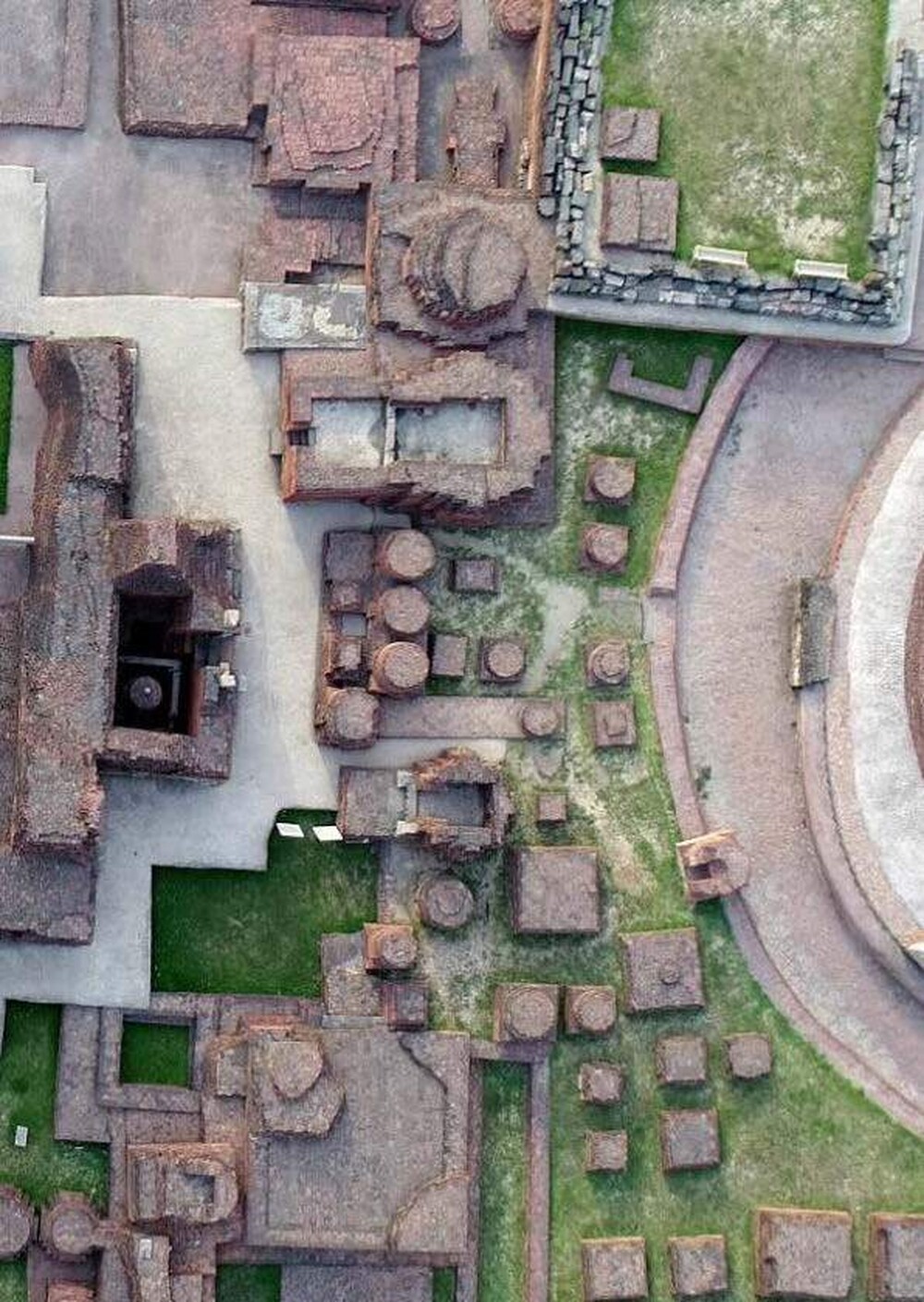
Image of Ancient Buddhist Site of Sarnath

© Archaeological Survey of India. Used with permission.

About World Heritage Explorer

World Heritage Explorer is an independent educational project designed to uncover and share the richness of our world’s cultural and natural heritage. Dive into detailed site profiles, immersive imagery, interactive maps, and tools that help you explore UNESCO World Heritage Sites across the globe. Drawing extensively on open data sources, the project delivers authoritative, well-structured information for learners, educators, travelers, and younger explorers alike.

Learn more about the project

Flag of India

India and the World Heritage Convention

State Party since: November 14, 1977

Status: Ratification

Mandates to the World Heritage Committee: 1985-1991, 2001-2007, 2011-2015, 2021-2025

Total of Mandate Years: 20

Total of Mandates: 4

WHC Electoral Group: IV (Asia/Pacific)

Learn more about India

Weather at the World Heritage Site

World Heritage Insights

Monasteries and Abbeys on the World Heritage List: Sacred Landscapes of Monastic and Spiritual Life

From vast cave universities and cliffside hermitages to monumental abbeys and temple cities, monastic heritage on the UNESCO World Heritage List reflects one of the most persistent ways in which human societies have organized spiritual life, learning, and landscape transformation. These sites are not only architectural achievements but also long-lived institutional systems—sometimes still active, sometimes archaeological—where religious practice shaped settlement patterns, artistic production, and political authority.

Last updated: August 5, 2026

Portions of the page Ancient Buddhist Site of Sarnath are based on data from UNESCO — World Heritage List Dataset and on text from the Wikipedia article Sarnath, licensed under CC BY-SA 4.0. Changes made. Additional original content by World Heritage Explorer (WHE), licensed under CC BY-SA 4.0. WHE is not affiliated with UNESCO or the World Heritage Committee. Legal Notice. Privacy Policy.

Open Data for an Open World