World Heritage Identification Number: 173
World Heritage since: 2000
Category: Cultural Heritage
WHE Type: Historic Cities & Urban Areas
Transboundary Heritage: No
Endangered Heritage: No
Country: 🇹🇿 United Republic of Tanzania
Continent: Africa
UNESCO World Region: Africa
Map
The Stone Town of Zanzibar: Cultural Fusion and Harmony in East Africa
The Stone Town of Zanzibar, officially recognized as a UNESCO World Heritage Site since 2000, stands as a testament to the rich cultural history of East Africa. Nestled on the western coast of Unguja, the primary island of the Zanzibar Archipelago, this historic urban district forms the old quarter of Zanzibar City, the principal metropolis of Zanzibar in Tanzania.
Known locally as Mji Mkongwe, Stone Town retains much of its historic urban fabric and layout, offering a vivid glimpse into centuries of cultural exchange across the Indian Ocean world, shaped especially between African, Arabian, Indian, and European influences. Stone Town developed primarily between the 18th and 19th centuries, reaching its peak as the capital of the Omani Sultanate of Zanzibar.
During this period, it became a major hub for the spice trade and a key center in the 19th-century Indian Ocean slave trade. Despite the decline of the sultanate and the establishment of a British protectorate in 1890, Stone Town remained the administrative and commercial heart of Zanzibar. Following the 1964 revolution and the union of Zanzibar with Tanganyika to form modern Tanzania, Zanzibar retained a semi-autonomous status, with Zanzibar City continuing as its principal urban and governmental center.
Stone Town is best understood within the broader context of Swahili coastal civilization, which developed along the East African coast long before the rise of the Omani Sultanate. Rather than being simply a meeting point of external influences, it is part of an established Swahili urban tradition shaped by centuries of Indian Ocean trade, Islam, and African cultural continuity.
One of the most striking aspects of Stone Town is its architectural diversity. Influenced by multiple civilizations over time, the city features coral stone buildings, intricately carved wooden doors, balconies, and verandas. Its Swahili architectural character is especially evident in elements such as interior courtyards, rooftop terraces, and decorative latticework, reflecting centuries of adaptation to climate, culture, and trade.
The historic core of Stone Town is also defined by several landmark buildings and public spaces that reflect its layered history. These include the House of Wonders (Beit-al-Ajaib), once the grand ceremonial palace of the sultan and a major historic monument currently undergoing ongoing conservation and restoration efforts following partial structural damage in recent years; the Old Fort (Ngome Kongwe), built in the 17th century for defense against Portuguese forces; and the former Slave Market site, now occupied by the Anglican Cathedral, which stands as a memorial to Zanzibar’s role in the 19th-century slave trade.
Zanzibar holds significant symbolic importance in the history of the suppression of the East African slave trade. As one of the region’s principal 19th-century slave-trading ports, Zanzibar—with Stone Town as its commercial center—played a central role in the trade networks of the Indian Ocean world. At the same time, it became a focal point in abolitionist discourse led by figures such as David Livingstone and supported by British missionary and naval campaigns.
Another important aspect of Stone Town is its vibrant cultural and religious life. The city is home to numerous mosques, churches, and Hindu temples, reflecting its long history as a multicultural trading port. Its markets offer spices, textiles, produce, and crafts that reflect Zanzibar’s historic role in the Indian Ocean trade network. Cultural events such as the Zanzibar International Film Festival are among the most notable contemporary celebrations associated with the city’s cultural identity.
In addition to its cultural and historical significance, Stone Town is also renowned for its natural beauty. The city is surrounded by picturesque beaches, mangrove ecosystems, and coral reefs teeming with marine life. These pristine environments provide opportunities for snorkeling, diving, and fishing, making Stone Town an attractive destination for eco-tourists seeking adventure and relaxation.
Efforts to preserve Stone Town’s heritage continue under institutions such as the Stone Town Conservation and Development Authority (STCDA), working in collaboration with national bodies and international partners like UNESCO. Through ongoing urban revitalization initiatives, authorities aim to restore the historic district's crumbling coral rag buildings while ensuring that it remains a vibrant, accessible space for locals and tourists alike.
Today, the Stone Town of Zanzibar stands as a remarkable testament to the rich cultural history of East Africa, valued for its architectural richness, layered cultural history, and connection to the Indian Ocean world. Ongoing preservation efforts aim to ensure that its unique character endures for future generations.
UNESCO Description of the World Heritage Site
The Stone Town of Zanzibar is a fine example of the Swahili coastal trading towns of East Africa. It retains its urban fabric and townscape virtually intact and contains many fine buildings that reflect its particular culture, which has brought together and homogenized disparate elements of the cultures of Africa, the Arab region, India, and Europe over more than a millennium.
UNESCO Justification of the World Heritage Site
Criterion (ii): The Stone Town of Zanzibar is an outstanding material manifestation of cultural fusion and harmonization.
Criterion (iii): For many centuries there was intense seaborne trading activity between Asia and Africa, and this is illustrated in an exceptional manner by the architecture and urban structure of the Stone Town.
Criterion (vi): Zanzibar has great symbolic importance in the suppression of slavery, since it was one of the main slave-trading ports in East Africa and also the base from which its opponents, such as David Livingstone, conducted their campaign.
Encyclopedia Record: Stone Town
The Stone Town of Zanzibar, also known as Mji Mkongwe, is the old part of Zanzibar City, the main city of Zanzibar, in Tanzania. The newer portion of the city is known as Ng'ambo, Swahili for 'the other side'. Stone Town is located on the western coast of Unguja, the main island of the Zanzibar Archipelago. Former capital of the Sultanate of Zanzibar, and flourishing centre of the spice trade as well as the Indian Ocean slave trade in the 19th century, it retained its importance as the main city of Zanzibar during the period of the British protectorate. When Tanganyika and Zanzibar joined each other to form the United Republic of Tanzania, Zanzibar kept a semi-autonomous status, with Stone Town as its local government seat.Additional Site Details
Area: 96 hectares
Number of Components: 1
(iii) — Unique or exceptional testimony to a cultural tradition
(vi) — Directly associated with events or living traditions
Coordinates: -6.16306 , 39.18917
Image
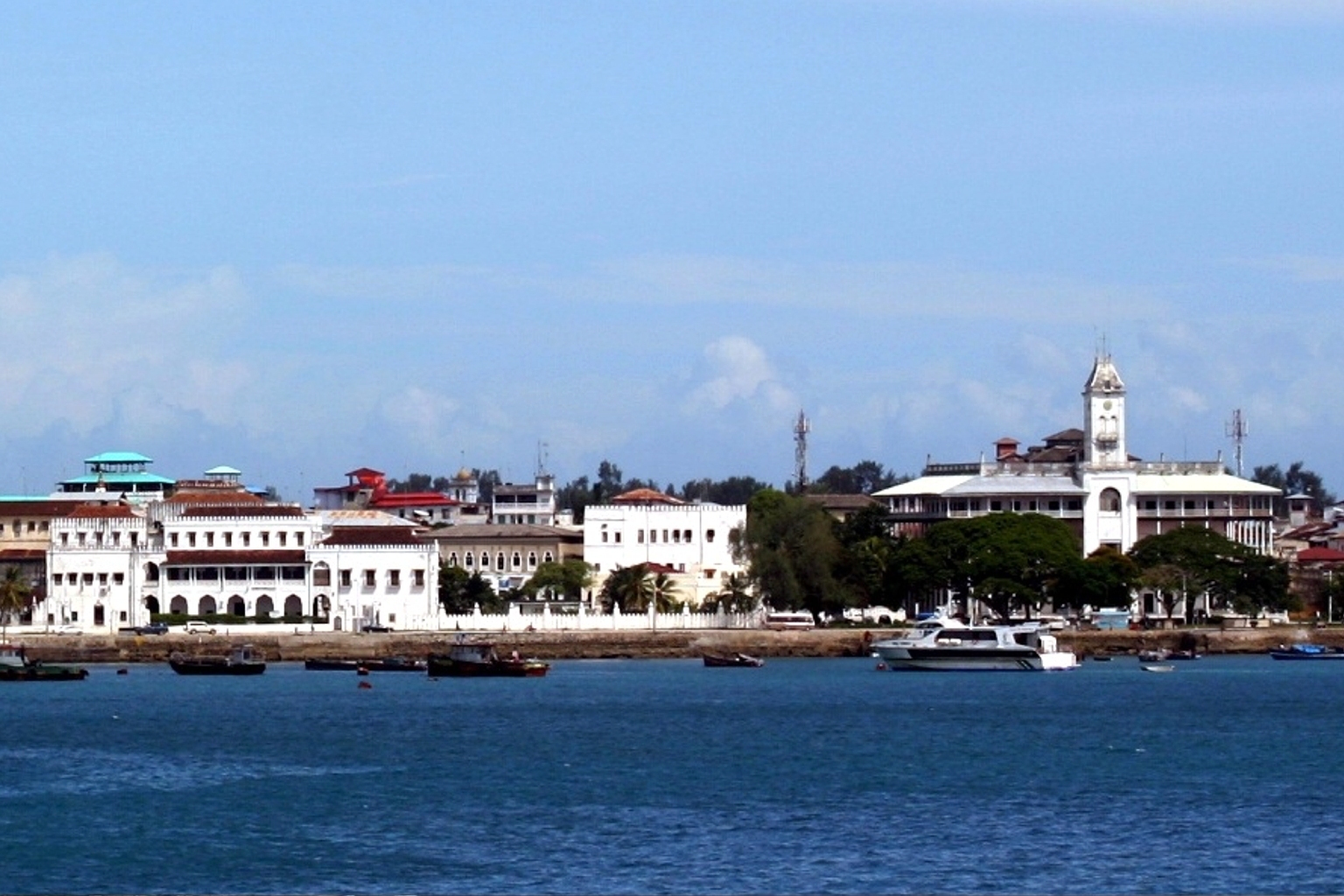
© No machine-readable author provided. Mbz1 assumed (based on copyright claims)., CC BY-SA 3.0 Resized from original. (This derivative is under the same CC BY-SA license.)
World Heritage Research
Discover scientific research and academic studies that deepen our understanding of Stone Town of Zanzibar from its history and significance to its conservation, management, and contemporary challenges.
-
Stone Town Built Heritage Identity as a Stimulus to Sustainable Urban Growth within Zanzibar City
Stone Town, Zanzibar's historic district, serves as a catalyst for sustainable urban growth by preserving its built heritage identity. This study reveals that local perceptions of Stone Town's cultural significance—rooted in Swahili, Arab, European, Indian, and African influences—can guide future development while safeguarding its unique architecture. Through qualitative methods including interviews and participatory workshops, researchers found that residents' attachment to Stone Town extends beyond its physical structures, shaping their vision for the city's expansion. The findings highlight heritage conservation as a key strategy to balance cultural, social, economic, and environmental sustainability in Zanzibar City. This work contributes to broader efforts to integrate heritage preservation into urban planning frameworks.
Haji Khamis, A., Hollmén, S., Koskinen, A., & Nimri, L. (2024). Stone Town Built Heritage Identity as a Stimulus to Sustainable Urban Growth within Zanzibar City. Environmental Science & Sustainable Development, 9(4), 19–33. https://doi.org/10.21625/essd.v9i4.1107
View Publication Record | Read Publication -
“Seeing like a City” – Sorting ‘Wire Spaghetti’ in Zanzibar Stone Town
Zanzibar Stone Town's 'wire spaghetti'—a chaotic tangle of electrical wires, water pipes, and cables—reveals deeper urban dynamics. This study deciphers the city's informal infrastructure, mapping its complexity to uncover how utility networks shape daily life in the historic Kasbah. By tracking connections from houses to lampposts, shop signs, and transformers, the research exposes a system of improvisation, resilience, and adaptation. The approach combines observational ethnography with detailed cataloging of materials (e.g., plastic, steel) and connectors, offering insights into how cities like Stone Town balance heritage preservation with functional needs in a UNESCO World Heritage Site.
Beck, R. M. (2023). “Seeing like a City” – Sorting ‘Wire Spaghetti’ in Zanzibar Stone Town. Africa and Urban Anthropology, 286–309. https://doi.org/10.4324/9781003003533-18
View Publication Record | Read Publication -
Ship graffiti at the Zanzibar Gereza (Old Fort), Stone Town, Unguja, Tanzania
A study of ship graffiti at the Zanzibar Gereza (Old Fort) reveals that these inscriptions, dating back to the 19th and early 20th centuries, provide valuable insights into maritime trade routes, ship movements, and cultural exchanges in the Indian Ocean. The research analyzed 35 unique graffiti entries, identifying patterns such as recurring ship names, ports of origin, and the use of specific symbols that reflect the diverse influences of Zanzibar's past. By combining historical records with on-site documentation, the study demonstrates how ephemeral maritime markings can serve as a tangible link to the region's trade history, offering new perspectives on Stone Town's role in global commerce during its prime.
Cooper, J. P., & Ghidoni, A. (2022). Ship graffiti at the Zanzibar Gereza (Old Fort), Stone Town, Unguja, Tanzania. Azania: Archaeological Research in Africa, 57(1), 90–120. https://doi.org/10.1080/0067270x.2022.2047526
View Publication Record | Read Publication -
Colors of Stone Town in Zanzibar: From white to black and back again
Stone Town in Zanzibar undergoes natural color transformations reflecting its historical, political, and economic evolution. Initially white during the 19th century, it darkened due to decay by the mid-20th century before being partially restored to whiteness through recent renovations along the coastal strip. This shift highlights gentrification boundaries while also symbolizing ethnic divisions within the city. The study analyzes these color changes as a result of construction, destruction, and reconstruction cycles rather than deliberate design, contrasting with other cities like Tel Aviv or Miami Beach where color is consciously manipulated for urban branding.
Jasiński, A. (2021). Colors of Stone Town in Zanzibar: From white to black and back again. Cities, 117, 103309. https://doi.org/10.1016/j.cities.2021.103309
View Publication Record | Read Publication -
Moving still: Bicycles in Ranchhod Oza’s photographs of 1950s Stone Town (Zanzibar)
Bicycles in Ranchhod Oza’s photographs of 1950s Stone Town (Zanzibar) serve as more than mere symbols of modernity; they reflect the material aspects of daily life and placeness in a cosmopolitan Indian Ocean port city. The study highlights how bicycles, whether carrying people or goods, or serving as stage props, embody movement and potential, offering insights into Oza’s photographic style and Zanzibar’s cultural and historical context. By analyzing these images, the research reveals bicycles' role in capturing the essence of Stone Town's dynamic urban landscape during a transformative period.
Gupta, P. (2020). Moving still: Bicycles in Ranchhod Oza’s photographs of 1950s Stone Town (Zanzibar). Journal of African Cinemas, 12(2), 191–211. https://doi.org/10.1386/jac_00036_1
View Publication Record | Read Publication -
Role of CCTV Camera Security Project on the Sustainability of Tourism Industry in Zanzibar: A Case of Old Stone Town, Urban West Region, Zanzibar
A significant portion of respondents (33%) demonstrated high awareness of CCTV camera security projects in Zanzibar, highlighting their potential to enhance tourism sustainability. The study identified six prevalent crimes—stealing, robbery, vehicle disorders, theft by servants, breaking, and assault—that CCTV systems effectively mitigate. Key impacts included creating a secure business environment, preventing crime, reducing private security costs, and extending business operating hours. The research recommends adopting public-private partnerships to expand CCTV adoption across Zanzibar, emphasizing its role in fostering a safer tourism industry. This study employed a descriptive case method with cross-sectional design, leveraging observation, interviews, and questionnaires to analyze data from 120 respondents.
Mahmoud, A. M. (2019). Role of CCTV Camera Security Project on the Sustainability of Tourism Industry in Zanzibar: A Case of Old Stone Town, Urban West Region, Zanzibar. Current Journal of Applied Science and Technology, 1–15. https://doi.org/10.9734/cjast/2019/v35i130167
View Publication Record | Read Publication -
(Sensuous) Ways of Seeing in Stone Town, Zanzibar: patina, pose, punctum
This study introduces a novel approach to interpreting the Ranchhod and Rohit Oza vernacular photography collection from Stone Town, Zanzibar (1930–present), challenging conventional historical or cultural readings. By focusing on the medium's characteristics—patina, pose, and punctum—the research offers a 'sensuous' framework that emphasizes incompleteness and visual perception over narrative completeness. This method shifts the interpretation of the Capital Art Studio (CAS) archive away from illustrative history toward an experiential, sensory engagement with the images. The study draws on John Berger's Ways of Seeing to recontextualize how photography is viewed, curated, and analyzed, providing a fresh lens for understanding vernacular visual culture in UNESCO-listed Stone Town.
Gupta, P. (2018). (Sensuous) Ways of Seeing in Stone Town, Zanzibar: patina, pose, punctum. Critical Arts, 32(1), 59–74. https://doi.org/10.1080/02560046.2018.1431298
View Publication Record | Read Publication -
Electromagnetic Shielding Effectiveness of Historic Buildings: The Heritage Stone Town of Zanzibar
Historic buildings constructed with traditional materials, such as coral stone, mud, and mangrove poles, exhibit significant electromagnetic shielding effectiveness (SE), comparable to renowned structures from the Roman Empire. This finding highlights the potential of these materials in mitigating health and security risks posed by electromagnetic radiation (EMR) from modern wireless devices. The study tested buildings in Stone Town of Zanzibar, demonstrating that their construction techniques and materials can effectively shield EMR, offering insights for future building designs to incorporate traditional materials for enhanced shielding properties.
Khalfan Amour Khalfan, Richard M. Besha, & Dennis N. G. A. K. Tesha. (2018). Electromagnetic Shielding Effectiveness of Historic Buildings: The Heritage Stone Town of Zanzibar. Journal of Civil Engineering and Architecture, 12(12). https://doi.org/10.17265/1934-7359/2018.12.004
View Publication Record | Read Publication -
Calcium Carbonate Production, Coral Cover and Diversity along a Distance Gradient from Stone Town: A Case Study from Zanzibar, Tanzania
Coral reefs near Stone Town, Zanzibar, exhibit significantly lower calcium carbonate production (8.47 ± 4.37 kg CaCO₃ m⁻² yr⁻¹), coral cover (52.4 ± 13.9%), and biodiversity compared to those farther away or within marine protected areas, where values peak at 16.90 ± 9.70 kg CaCO₃ m⁻² yr⁻¹, 67.4 ± 8.7% cover, and higher diversity (H′ = 1.74 ± 0.20). This gradient suggests that human activities—such as fishing pressure, pollution, unregulated tourism, and anchoring—severely degrade reef health, while protection measures mitigate these impacts. The study highlights the critical role of distance from urban centers and management regimes in shaping coral community structure, with reefs closest to Stone Town dominated by stress-tolerant species like Porites lobata and P. rus. These findings underscore the need for targeted conservation efforts to preserve Zanzibar’s reef ecosystems.
Herrán, N., Narayan, G. R., Reymond, C. E., & Westphal, H. (2017). Calcium Carbonate Production, Coral Cover and Diversity along a Distance Gradient from Stone Town: A Case Study from Zanzibar, Tanzania. Frontiers in Marine Science, 4. https://doi.org/10.3389/fmars.2017.00412
View Publication Record | Read Publication -
Producing a World of Remains in Indian Ocean Africa: Discrepant Time, Melancholy Affect and the Subject of Transport in Capital Art Studio, Stone Town, Zanzibar
Capital Art Studio in Stone Town, Zanzibar, employs a unique visual idiom that challenges the heritage industry's narrative by re-presenting the city as a 'melancholy palimpsest.' This approach simultaneously evokes Zanzibar's past as an 'island metropolis' while resisting its consignment to history. The studio's photographic archive reveals discrepant temporalities, offering surfaces for self-fashioning that contrast with those of other postcolonial studios. By framing the past within a neoliberal global order, the studio articulates a time that was both cosmopolitan and commodifying, providing a nuanced perspective on Zanzibar's complex historical interface between the Indian Ocean world and continental Africa.
Samuelson, M. (2016). Producing a World of Remains in Indian Ocean Africa: Discrepant Time, Melancholy Affect and the Subject of Transport in Capital Art Studio, Stone Town, Zanzibar. African Studies, 75(2), 233–256. https://doi.org/10.1080/00020184.2016.1182318
View Publication Record | Read Publication -
Tourism employment and local residents’ engagement in the conservation of the built heritage in Zanzibar Stone Town in Tanzania
Tourism employment significantly influences local residents' engagement in conserving Zanzibar Stone Town's built heritage, acting as a key moderator between attitudes toward conservation and the intention to conserve. This finding extends the Theory of Planned Behavior (TPB) by integrating tourism factors, revealing that employed residents are more likely to engage in conservation efforts when they perceive social pressure or feel in control of their actions. The study, based on surveys of 208 households, underscores the importance of situational factors like employment in shaping conservation behavior. These insights have implications for both policy and management strategies aimed at preserving UNESCO World Heritage Sites.
Lwoga, N. B. (2016). Tourism employment and local residents’ engagement in the conservation of the built heritage in Zanzibar Stone Town in Tanzania. Sustainable Tourisim VII, 1, 43–55. https://doi.org/10.2495/st160041
View Publication Record | Read Publication -
The Contribution of IslamicWaqfto Managing the Conservation of Buildings in the Historic Stone Town of Zanzibar
A resilient management system rooted in Islamic waqf traditions effectively shields historic buildings from external threats, ensuring their long-term survival. This study examines the Stone Town of Zanzibarwhere waqf structures provide financial and operational frameworks that adapt to economic, political, and human pressures. By analyzing waqf's governance, financing, and maintenance practices, researchers found that its ability to evolve with prevailing conditions acts as a critical safeguard against degradation. Unlike conventional conservation models, this approach emphasizes proactive protection over reactive maintenance, offering a sustainable blueprint for preserving cultural heritage.
Khalfan, K. A., & Ogura, N. (2012). The Contribution of IslamicWaqfto Managing the Conservation of Buildings in the Historic Stone Town of Zanzibar. International Journal of Cultural Property, 19(2), 153–174. https://doi.org/10.1017/s0940739112000112
View Publication Record | Read Publication -
The dialectics of functional and historical morphology in the evolution of a city: the case of the Stone Town of Zanzibar
A study of the Stone Town of Zanzibar reveals that its axial street structure has remained a consistent force shaping urban functions despite significant historical and socio-political changes. The research found that the town's syntactic centrality, analyzed through Space Syntax techniques, evolved in distinct phases but maintained a diffused pattern influencing current land use, ownership, building classifications, and streetscape elements. This dialectical relationship between history and function offers an enriched methodology for understanding urban morphological processes, bridging historical specificity with generic spatial analysis. The findings contribute to both urban theory and historical research by emphasizing the interplay between design and power politics in traditional cities.
Rashid, M., & Shateh, H. (2012). The dialectics of functional and historical morphology in the evolution of a city: the case of the Stone Town of Zanzibar. The Journal of Architecture, 17(6), 889–924. https://doi.org/10.1080/13602365.2012.746009
View Publication Record | Read Publication -
Sustainable architectural conservation according to traditions of Islamicwaqf: the World Heritage–listed Stone Town of Zanzibar
The tradition of Islamic waqf in Zanzibar's Stone Town offers a sustainable model for architectural conservation, balancing heritage preservation with urban use. This study reveals that waqf buildings have survived centuries without significant decay, suggesting inherent sustainability 'genes' within the tradition. By examining financial, social, managerial, and environmental aspects, researchers found that waqf effectively prevents gentrification while enabling collective urban conservation. The findings highlight that sustainable heritage practices require monetary sacrifices but can be long-lasting if embedded in cultural traditions.
Khalfan, K. A., & Ogura, N. (2012). Sustainable architectural conservation according to traditions of Islamicwaqf: the World Heritage–listed Stone Town of Zanzibar. International Journal of Heritage Studies, 18(6), 588–604. https://doi.org/10.1080/13527258.2011.607175
View Publication Record | Read Publication