World Heritage Identification Number: 975
World Heritage since: 2001
Category: Cultural Heritage
WHE Type: Infrastructure & Industry
Transboundary Heritage: No
Endangered Heritage: No
Country: 🇩🇪 Germany
Continent: Europe
UNESCO World Region: Europe and North America
Map
Zollverein Coal Mine Industrial Complex: A Testimony to Industrial Rise, Transformation, and Decline
The Zollverein Coal Mine Industrial Complex, located in the city of Essen in North Rhine-Westphalia, Germany, stands as a significant testament to the rise, transformation, and eventual decline of the coal mining industry over roughly 150 years. Inscribed as a UNESCO World Heritage Site in 2001, this expansive industrial complex offers a unique insight into the history, architecture, and technology that shaped industrial coal production during its peak.
The origins of the Zollverein Coal Mine date back to 1847 when the first mine was established on the site. Mining activities commenced in earnest in 1851, marking the beginning of a long and productive period that would see the site become one of the most prominent coal mining operations in Europe. Over time, the complex expanded to include multiple shafts as well as the Zollverein Coking Plant, together forming an integrated industrial system that encompassed both coal extraction and processing.
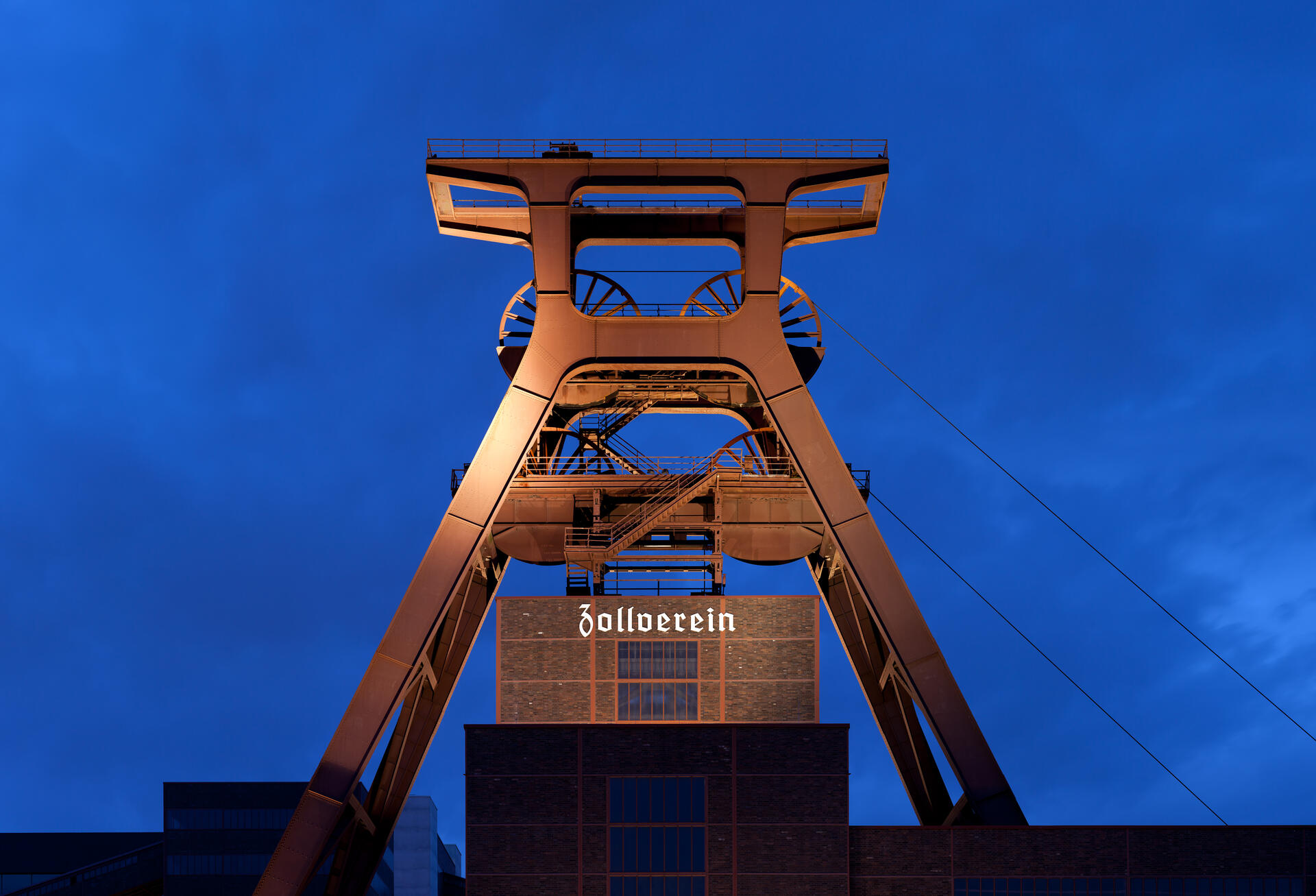
One of the most striking features of the Zollverein Coal Mine Industrial Complex is Shaft 12, built in the New Objectivity (Neue Sachlichkeit) architectural style and brought into operation in 1932. This architectural marvel has been hailed as the "most beautiful coal mine in the world." Shaft 12 is renowned for its clear lines, symmetrical layout, and emphasis on functional design. Beyond its architectural significance, it represented a major advance in mining efficiency, centralizing production and setting new standards for industrial design.
Throughout its operational life, the Zollverein Coal Mine Industrial Complex underwent numerous transformations to adapt to changing technological demands and market conditions. These changes resulted in the construction of various structures that reflect different periods in the history of the coal mining industry. Among these are the Administration Building, the Power Station, and the Waste Heat Boiler House, all of which exhibit distinct architectural styles and serve as reminders of the complex's rich history.
As the coal mining industry began to decline in the latter half of the 20th century, the Zollverein Coal Mine was no exception. On December 23, 1986, the last coal was extracted from the mine, marking the end of an era. However, the site did not fall into disrepair; instead, it was transformed into a cultural and educational center, eventually becoming the Zollverein World Heritage Site. Today, visitors can explore the complex, gaining valuable insights into the history, technology, and social history of the coal mining industry.
Alongside its architectural and technological achievements, the Zollverein Coal Mine Industrial Complex also bears witness to the challenges and failures inherent in industrial coal production. Mining at Zollverein involved hazardous working conditions, environmental pollution, and a regional dependence on a single extractive industry. The eventual closure of the mine underscores the economic and social vulnerabilities created by such dependence, highlighting the long-term consequences of industrial models that prioritized productivity over sustainability.
Overall, the Zollverein Coal Mine Industrial Complex serves as a vital reminder of the coal mining industry's impact on the world, particularly in terms of economic development, urbanization, and technological advancement. As a UNESCO World Heritage Site, it provides an opportunity to examine the industry's evolution, its decline, and the legacies — both achievements and failures— left behind. By preserving this important piece of history, we ensure that future generations will have a better understanding of our industrial past, and the lessons it holds for our present and future.
UNESCO Description of the World Heritage Site
The Zollverein industrial complex in Land Nordrhein-Westfalen consists of the complete infrastructure of a historical coal-mining site, with some 20th-century buildings of outstanding architectural merit. It constitutes remarkable material evidence of the evolution and decline of an essential industry over the past 150 years.
UNESCO Justification of the World Heritage Site
Criterion (ii): The Zollverein XII Coal Mine Industrial Complex is an exceptional industrial monument by virtue of the fact that its buildings are outstanding examples of the application of the design concepts of the Modern Movement in architecture in a wholly industrial context.
Criterion (iii): The technological and other structures of Zollverein XII are representative of a crucial period in the development of traditional heavy industries in Europe, which were reinforced through the parallel development and application of Modern Movement architectural designs of outstanding quality.
Encyclopedia Record: Zollverein Coal Mine Industrial Complex
The Zollverein Coal Mine Industrial Complex is a large former industrial site in the city of Essen, North Rhine-Westphalia, Germany. The first coal mine on the premises was founded in 1847, and mining activities took place from 1851 until 23 December 1986. For decades, starting in the late 1950s, the two parts of the site, Zollverein Coal Mine and Zollverein Coking Plant, ranked among the largest of their kinds in Europe. Shaft 12, built in the New Objectivity style, was opened in 1932 and is considered an architectural and technical masterpiece, earning it a reputation as the "most beautiful coal mine in the world".Additional Site Details
Area: Not available
Number of Components: 1
(iii) — Unique or exceptional testimony to a cultural tradition
Coordinates: 51.49138889 , 7.046111111
Image
© Thomas Wolf, www.foto-tw.de, CC BY-SA 3.0 de Resized from original. (This derivative is under the same CC BY-SA license.)