World Heritage Identification Number: 231
World Heritage since: 2007
Category: Cultural Heritage
WHE Type: Buildings & Architectural Ensembles
Transboundary Heritage: No
Endangered Heritage: No
Country: 🇮🇳 India
Continent: Asia
UNESCO World Region: Asia and the Pacific
Map
The Red Fort Complex: A Symphony of Mughal Architecture
The Red Fort Complex, officially known as the Lal Qila, stands as a testament to the grandeur and artistic achievements of the Mughal Empire. Located in the heart of Old Delhi, India, this historic fort served as the principal residence of the Mughal emperors from its completion in 1648 until the end of Mughal rule in 1857. Commissioned by Emperor Shah Jahan in 1638 and completed in 1648, the fort represents the height of Mughal creativity, showcasing a harmonious blend of Persian, Timurid, and Indian architectural influences.
The Red Fort takes its name from its imposing red sandstone walls, which enclose a vast area that once housed the imperial palace of Shahjahanabad, the new capital of the Mughal Empire. Adjacent to the older Salimgarh Fort, built by Islam Shah Suri in 1546, the two structures together form the Red Fort Complex, which was inscribed as a UNESCO World Heritage Site in 2007. The fort was created under Shah Jahan’s patronage by the imperial chief architect Ustad Ahmad Lahori—the legendary mastermind behind the Taj Mahal — alongside the master builder Ustad Hamid, whose collaborative planning and supervision brought the emperor's ambitious vision of Shahjahanabad to life.
The Red Fort is a masterpiece of Mughal architecture, characterized by intricate details, delicate craftsmanship, and a harmonious integration of various architectural traditions. The layout of the palace follows Islamic and Persian prototypes, while each pavilion within the complex exhibits distinctive Mughal architectural elements. The private apartments consist of a row of pavilions connected by a continuous water channel known as the Nahr-i-Behisht (“Stream of Paradise”). This innovative planning and architectural style significantly influenced later buildings and gardens not only in Delhi, Rajasthan, and Agra but also throughout the Indian subcontinent.
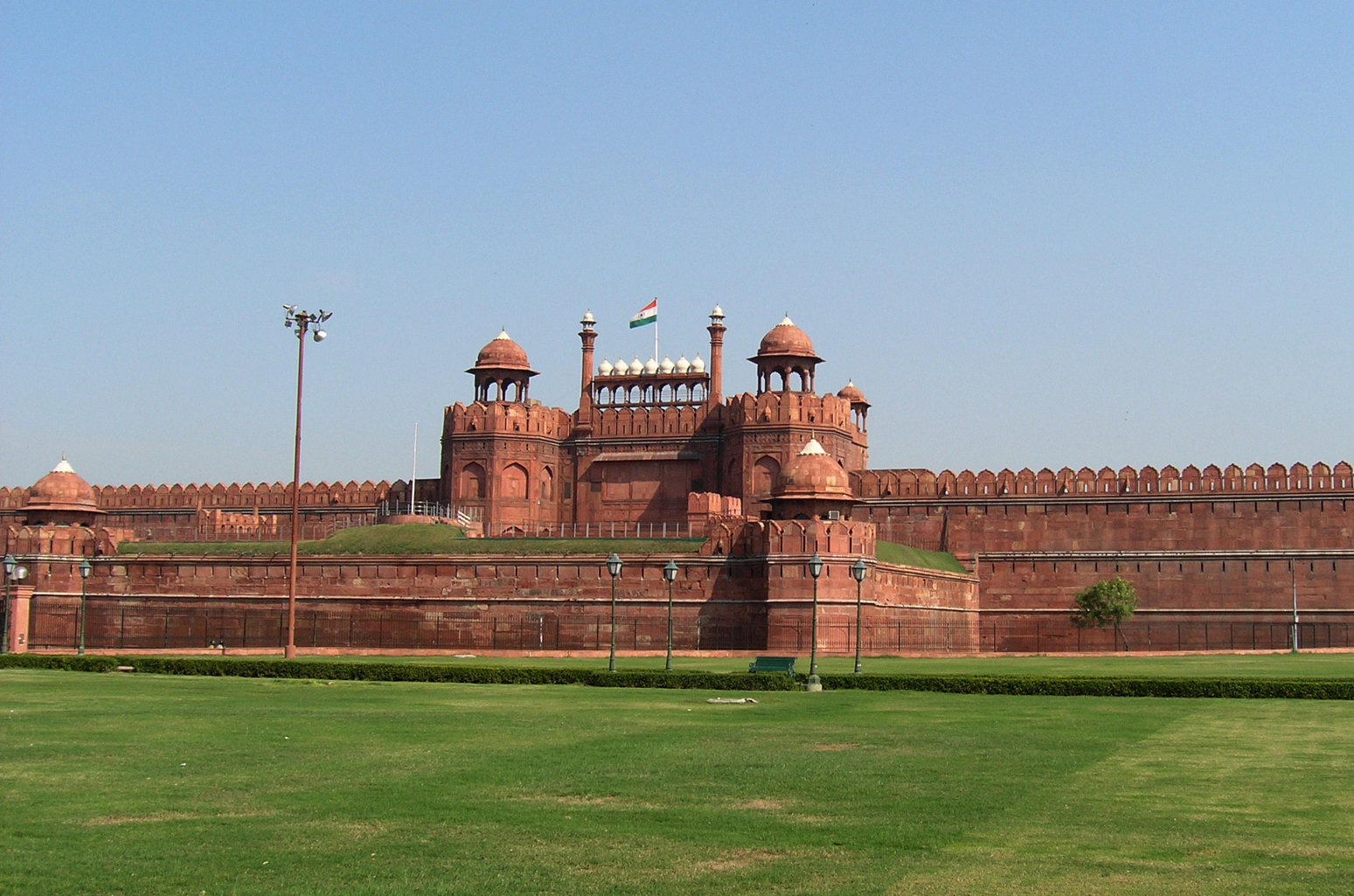
One of the most striking features of the Red Fort Complex is its extensive use of red sandstone. The sandstone is enhanced with intricate carvings, calligraphic details, marble inlay, and geometric and floral patterns, creating a remarkable display of Mughal craftsmanship. The fort’s main gate, the Lahore Gate, is particularly notable as an important architectural landmark and national symbol.
Inside the fort, visitors can explore a variety of courtyards, pavilions, and gardens. The Diwan-i-Am, or Hall of Public Audience, is a spacious courtyard where the emperor would address his subjects and conduct official affairs. The Diwan-i-Khas, or Hall of Private Audience, was a more intimate space reserved for meetings with dignitaries and important guests. The complex also contains the Moti Masjid, or Pearl Mosque, built by Emperor Aurangzeb in 1659 primarily of white marble and known for its elegant design.
The Red Fort Complex is not just a monument to the power and wealth of the Mughal Empire; it is also a symbol of the cultural fusion that defined the period. The blending of Persian, Timurid, and Indian architectural traditions reflects the diverse influences that shaped Mughal artistic expression. Recognized as a UNESCO World Heritage Site for its outstanding historical and architectural significance, the Red Fort stands as a lasting testament to the creative achievements of the Mughals.
Beyond its historical significance, the Red Fort holds a special place in modern India’s national identity. Since India gained independence in 1947, the Prime Minister of India has hoisted the national flag and delivered the Independence Day address from the Red Fort every year on August 15. This tradition has transformed the monument into a powerful symbol of India’s sovereignty and heritage.
Today, the Red Fort Complex remains one of India’s most celebrated cultural landmarks, attracting millions of visitors each year. Its magnificent walls, royal halls, gardens, and artistic details offer a glimpse into the grandeur of the Mughal era while preserving the rich historical and architectural legacy of India.
UNESCO Description of the World Heritage Site
The Red Fort Complex was built as the palace fort of Shahjahanabad – the new capital of the fifth Mughal Emperor of India, Shah Jahan. Named for its massive enclosing walls of red sandstone, it is adjacent to an older fort, the Salimgarh, built by Islam Shah Suri in 1546, with which it forms the Red Fort Complex. The private apartments consist of a row of pavilions connected by a continuous water channel, known as the Nahr-i-Behisht (Stream of Paradise). The Red Fort is considered to represent the zenith of Mughal creativity which, under the Shah Jahan, was brought to a new level of refinement. The planning of the palace is based on Islamic prototypes, but each pavilion reveals architectural elements typical of Mughal building, reflecting a fusion of Persian, Timurid and Hindu traditions The Red Fort’s innovative planning and architectural style, including the garden design, strongly influenced later buildings and gardens in Rajasthan, Delhi, Agra and further afield.
UNESCO Justification of the World Heritage Site
Criterion (ii): The final flourishing of Mughal architecture built upon local traditions but enlivened them with imported ideas, techniques, craftsmanship and designs to provide a fusion of Islamic, Persian, Timurid and Hindu traditions. The Red Fort demonstrates the outstanding results this achieved in planning and architecture.
Criterion (iii): The innovative planning arrangements and architectural style of building components and garden design developed in the Red Fort strongly influenced later buildings and gardens in Rajasthan, Delhi, Agra and further afield. The Red Fort Complex also reflects the phase of British military occupation, introducing new buildings and functions over the earlier Mughal structures.
Criterion (vi): The Red Fort has been a symbol of power since the reign of Shah Jahan, has witnessed the change in Indian history to British rule, and was the place where Indian independence was first celebrated, and is still celebrated today. The Red Fort Complex has thus been the setting of events critical to the shaping of regional identity, and which have had a wide impact on the geo-cultural region.
Encyclopedia Record: Red Fort
The Red Fort is a historic Mughal fort located in the Old Delhi area of Delhi, India. Serving as the main residence of the Mughal emperors, it was commissioned by Emperor Shah Jahan on the 12th of May 1639; the fort was constructed following his decision to shift the Mughal capital from Agra to Delhi. Originally adorned in red and white, the fort's design is attributed to Ustad Ahmad Lahori, the architect of the Taj Mahal. The Red Fort is a prominent example of Mughal architecture from Shah Jahan's reign, combining Persian and Indian architectural styles.Additional Site Details
Area: 49.1815 hectares
Number of Components: 1
(iii) — Unique or exceptional testimony to a cultural tradition
(vi) — Directly associated with events or living traditions
Coordinates: 28.6555555556 , 77.2408333333