World Heritage Identification Number: 345
World Heritage since: 1997
Category: Cultural Heritage
WHE Type: Historic Cities & Urban Areas
Transboundary Heritage: No
Endangered Heritage: No
Country: 🇫🇷 France
Continent: Europe
UNESCO World Region: Europe and North America
Map
The Historic Fortified City of Carcassonne: A Medieval Masterpiece in Modern France
The Historic Fortified City of Carcassonne, inscribed as a UNESCO World Heritage Site in 1997, stands as a remarkable testament to the architectural prowess and strategic ingenuity of the Middle Ages. Situated in the heart of the French city of Carcassonne, in the Aude department of the Occitanie region, this medieval citadel offers an unparalleled glimpse into the past, blending history, art, and culture in a harmonious symphony that resonates across centuries.
The origins of Carcassonne can be traced back to the pre-Roman era, when a fortified settlement was established on the hill where the city now stands. Over time, the site evolved into a significant stronghold during the Gallo-Roman period, serving as a crucial outpost against invasions from various Germanic tribes. The city's strategic location on the right bank of the River Aude further enhanced its defensive capabilities.
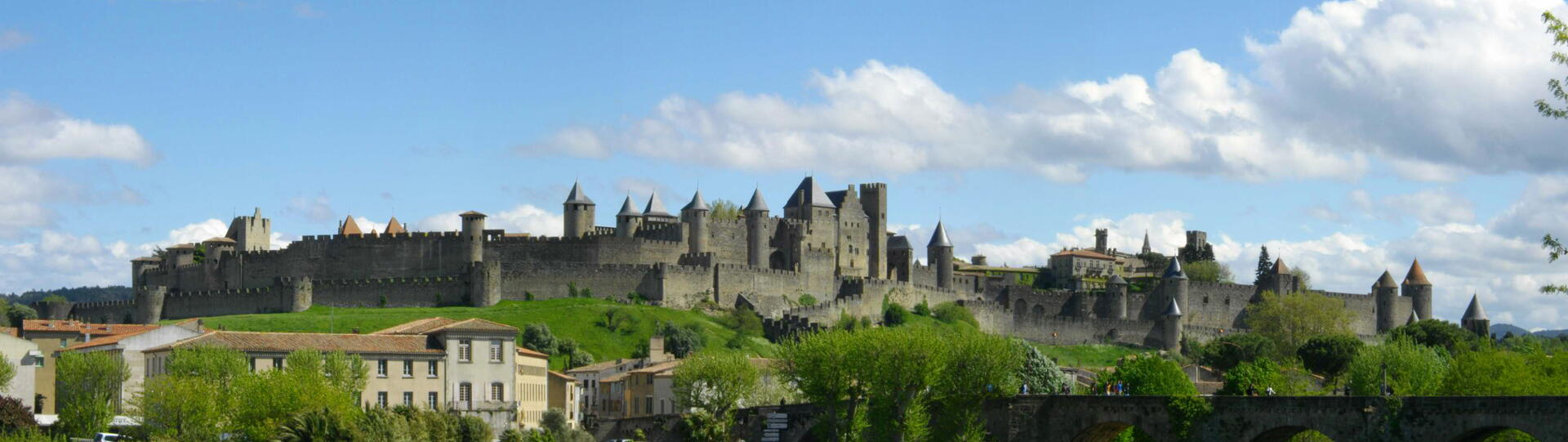
In its current form, Carcassonne represents an extraordinary example of a medieval fortified town, characterized by its unique double circuit of defensive walls and 52 towers, stretching nearly 3 kilometers. The massive defenses encompassing the castle and the surrounding buildings create an imposing silhouette against the skyline. The labyrinthine network of narrow, winding streets within the city walls adds to the sense of mystery and intrigue, while the Basilica of Saints Nazarius and Celsus, with its notable Gothic elements, serves as the spiritual heart of the citadel.
One of the most notable aspects of Carcassonne is the extensive restoration campaign undertaken by Eugène Viollet-le-Duc, a pioneering figure in architectural conservation and one of the founders of modern historic preservation in France. Beginning in the mid-19th century, Viollet-le-Duc restored numerous structures within the city, applying his distinctive interpretation of medieval architecture to revive these ancient monuments. His work has been instrumental in preserving Carcassonne for future generations, ensuring that the spirit of the Middle Ages endures within its sturdy stone walls.
Today, the Historic Fortified City of Carcassonne continues to captivate visitors from around the world. Its rich history, stunning architecture, and picturesque setting make it a must-see destination for anyone interested in exploring medieval European history. As of 2026, Carcassonne remains one of France's most visited sites, seeing between 2 million and 4 million visitors annually. Whether wandering the cobblestone streets, admiring the details of the basilica, or simply taking in the breathtaking panorama from the city walls, there is no denying the enduring allure of this remarkable fortified city and medieval masterpiece.
In summary, the Historic Fortified City of Carcassonne stands as a shining example of human ingenuity and resilience, offering a tangible link to our collective past. As a UNESCO World Heritage Site, it serves as a reminder of the importance of preserving our cultural heritage for future generations, while also providing a fascinating insight into the lives and experiences of those who came before us. Whether you are a history enthusiast, an architecture lover, or simply seeking a memorable travel experience, the Historic Fortified City of Carcassonne is sure to leave a lasting impression.
UNESCO Description of the World Heritage Site
Since the pre-Roman period, a fortified settlement has existed on the hill where Carcassonne now stands. In its present form it is an outstanding example of a medieval fortified town, with its massive defences encircling the castle and the surrounding buildings, its streets and its fine Gothic cathedral. Carcassonne is also of exceptional importance because of the lengthy restoration campaign undertaken by Viollet-le-Duc, one of the founders of the modern science of conservation.
UNESCO Justification of the World Heritage Site
Criterion (ii): The fortified city of Carcassonne owes its exceptional importance to the restoration work undertaken during the second half of the 19th century by Viollet-le-Duc, who strongly influenced the evolution of conservation principles and practices.
Criterion (iv): The city of Carcassonne is an excellent example of a fortified medieval city whose enormous defensive system was built on ramparts dating from late antiquity.
Encyclopedia Record: Cité de Carcassonne
The Cité de Carcassonne is a medieval citadel located in the French city of Carcassonne, in the Aude department, Occitania region. It is situated on a hill on the right bank of the river Aude, in the south-eastern part of the city proper.Additional Site Details
Area: 11 hectares
Number of Components: 1
(iv) — Outstanding example of a type of building or landscape
Coordinates: 43.2070631 , 2.3636562
Image
© Jondu11, CC BY-SA 4.0 Resized from original. (This derivative is under the same CC BY-SA license.)