World Heritage Identification Number: 976
World Heritage since: 2000
Category: Cultural Heritage
WHE Type: Archaeological Sites
Transboundary Heritage: No
Endangered Heritage: No
Country: 🇰🇷 Republic of Korea
Continent: Asia
UNESCO World Region: Asia and the Pacific
Map
Unraveling the Rich History of Gyeongju Historic Areas
The Gyeongju Historic Areas, nestled within the heart of Gyeongju, South Korea, serve as a testament to the flourishing of the Silla Kingdom (57 BC – 935 AD). This UNESCO World Heritage Site, designated in 2000, offers a rich tapestry of Korean cultural heritage, showcasing an exceptional collection of Buddhist-related remains, royal tombs, ancient palace sites, and sacred mountain landscapes.
The Silla Kingdom, one of the Three Kingdoms of Korea, reached its zenith between the 7th and 9th centuries. During this period, Gyeongju functioned as its capital and became a major center of politics, religion, and culture. The Gyeongju Historic Areas reflect this golden age, preserving the urban, spiritual, and funerary landscapes of a highly sophisticated early Korean state.
One of the defining characteristics of the Gyeongju Historic Areas is the integration of Buddhist heritage into the natural landscape. Rather than a single concentrated complex, the site is composed of five distinct belts scattered across the city and surrounding hills. These include temple ruins, stone Buddha carvings, pagodas, and sacred sites that together illustrate the spread and localization of Buddhism in Silla society.
Among the most significant components is the Mount Namsan Belt, which functions as an open-air museum featuring countless stone Buddhas, relief carvings, and temple ruins embedded in the mountain landscape. The Tumuli Park Belt (including the Daereungwon Tomb Complex) contains large earthen burial mounds belonging to Silla royalty and elites, offering insight into ancient burial customs and social hierarchy. The former palace area at the Wolseong Belt, along with the nearby Donggung Palace and Wolji Pond, reflects the political and ceremonial center of the Silla capital.
Another important monument within the Wolseong Belt is Cheomseongdae, regarded as one of the oldest surviving astronomical observatories in East Asia. Built in the 7th century during the reign of Queen Seondeok, it demonstrates the advanced scientific knowledge of the Silla period and the importance of astronomy in governance and ritual practice.
The Sanseong Belt represents the defensive landscape of the surrounding hills. These elevated fortification areas, such as Myeonghwal Fortress, illustrate the military dimension of the Silla capital and its strategic use of natural terrain for protection. In combination with the palace grounds and royal tombs, they highlight how Gyeongju functioned as a fully integrated capital where political power, spiritual life, and urban planning were closely interconnected.
A key component of the Hwangnyongsa Belt is the remains of the Hwangnyongsa Temple Site, once one of the largest temple complexes in East Asia. Although now in ruins, the site reflects the Silla Kingdom’s strong state support for Buddhism and its ambition to express political authority through monumental religious architecture. Together with the nearby Bunhwangsa Temple, it provides crucial evidence of how Buddhism was integrated into the urban and ideological framework of the ancient capital.
While the Gyeongju Historic Areas encompass the heart of the ancient capital, they are perfectly complemented by a neighboring UNESCO World Heritage site designated in 1995: Seokguram Grotto and Bulguksa Temple. Located on the slopes of Mount Toham, these sites represent the pinnacle of Silla’s architectural and artistic mastery, and serve as a spiritual extension of the Gyeongju Historic Areas, completing the narrative of a kingdom that sought to create a Buddhist utopia on earth.
Altogether, the Gyeongju Historic Areas present a multilayered cultural landscape that reflects the political power, religious development, and artistic achievements of the Silla Kingdom. The combination of royal tombs, palace ruins, Buddhist relics, and scientific structures creates a rare historical continuity that allows visitors to experience the depth of early Korean civilization. The site stands as a powerful reminder of the cultural sophistication and enduring legacy of Silla heritage.
UNESCO Description of the World Heritage Site
The Gyeongju Historic Areas contain a remarkable concentration of outstanding examples of Korean Buddhist art, in the form of sculptures, reliefs, pagodas, and the remains of temples and palaces from the flowering, in particular between the 7th and 10th centuries, of this form of unique artistic expression.
UNESCO Justification of the World Heritage Site
Criterion (ii): The Gyeongju Historic Areas contain a numberof sites and monuments of exceptional significance in the development of Buddhist and secular architecture in Korea.
Criterion (iii): The Korean peninsula was ruled for nearly a thousand years by the Silla dynasty, and the sites and monuments in and around Gyeongju (including the holy mountain of Namsan) bear outstanding testimony to its cultural achievements.
Encyclopedia Record: Gyeongju Historic Areas
Gyeongju Historic Areas is a World Heritage Site in Gyeongju, South Korea that was designated by UNESCO in 2000. The protected areas encompass the ruins of temples and palaces, outdoor pagodas and statuary, and other cultural artifacts left by the Koreanic kingdom Silla.Additional Site Details
Area: 2,880 hectares
Number of Components: 5
(iii) — Unique or exceptional testimony to a cultural tradition
Coordinates: 35.78889 , 129.22667
Image
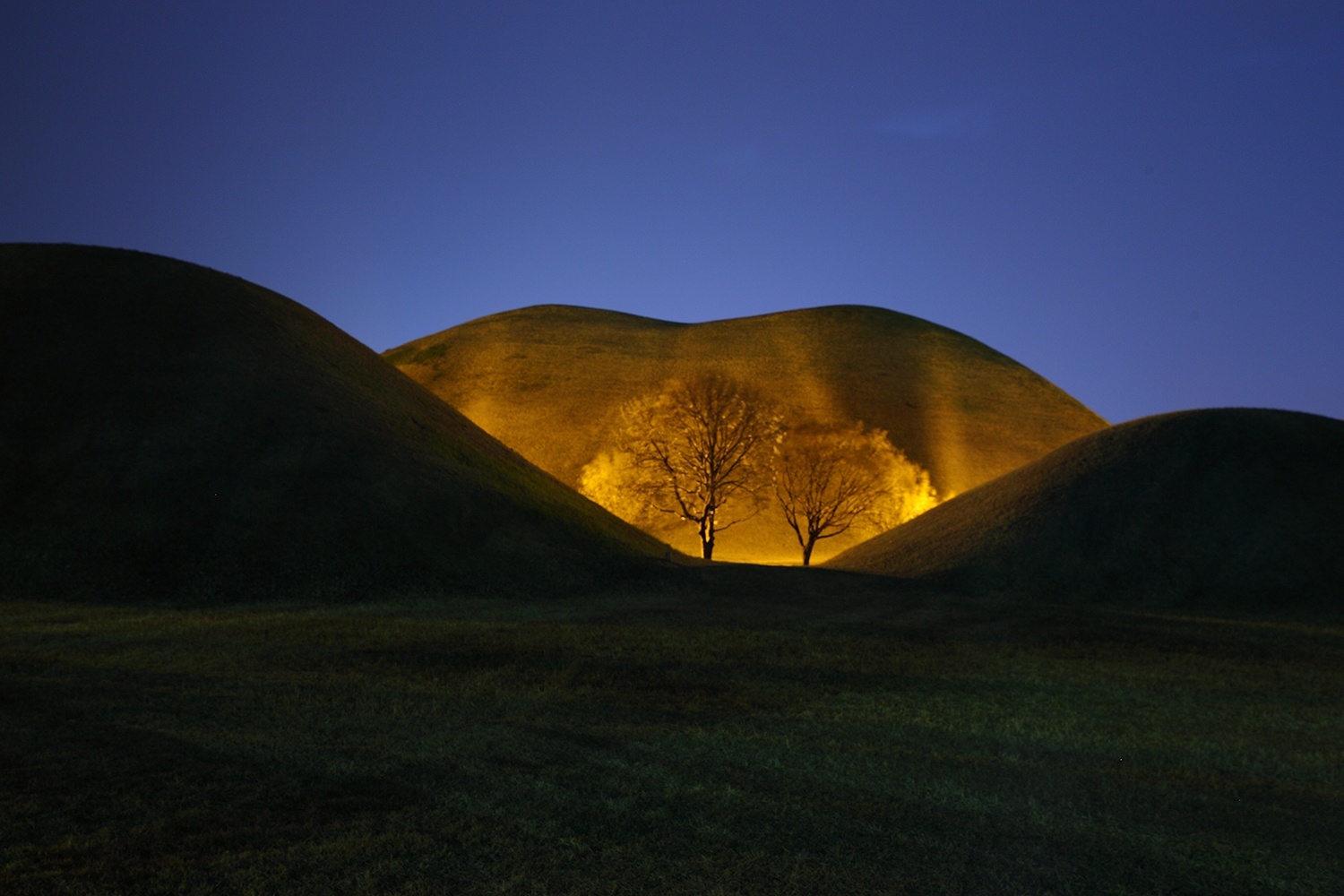
© Sung Soo KIM, CC BY-SA 3.0 Resized from original. (This derivative is under the same CC BY-SA license.)
World Heritage Research
Discover scientific research and academic studies that deepen our understanding of Gyeongju Historic Areas from its history and significance to its conservation, management, and contemporary challenges.
-
A Study on the Management Strategy of World Heritage Gyeongju Historic Area: Focusing on the Credibility of the World Heritage List
Gyeongju Historic Areas face significant threats to their World Heritage status, primarily from restoration practices lacking historical evidence, natural disasters, and overtourism. To mitigate these risks, the study proposes three key strategies: establishing standardized restoration guidelines, implementing preemptive disaster response systems, and fostering community engagement through awareness campaigns and participatory management plans. These measures aim to preserve the site's outstanding universal value while ensuring sustainable management. The research highlights the importance of credibility in maintaining World Heritage status, emphasizing the need for rigorous preservation practices and proactive threat mitigation.
Kim, S. (2023). A Study on the Management Strategy of World Heritage Gyeongju Historic Area: Focusing on the Credibility of the World Heritage List. The Korean Society of Culture and Convergence, 45(4), 375–387. https://doi.org/10.33645/cnc.2023.04.45.04.375
View Publication Record | Read Publication -
A Study of Manufacturing Techniques based on Classification by Uses of Excavated Iron Objects from the Remains in Geumcheok-ri, Gyeongju
A study of iron objects from Geumcheok-ri, Gyeongju, reveals advanced metallurgical techniques used during the late 5th to early 6th centuries. The research found that iron was forged with varying carbon content and carburized post-forging to enhance strength, depending on the object's function. Selective steelmaking and heat treatment further improved mechanical properties. These techniques show consistency with those used in central Gyeongju and its outskirts, suggesting a unified approach to iron production during Silla's expansion. The study analyzed eight objects by their use, examining microstructure and non-metallic inclusions to classify manufacturing processes.
You, H. R., Cho, N. C., & Shin, Y. B. (2022). A Study of Manufacturing Techniques based on Classification by Uses of Excavated Iron Objects from the Remains in Geumcheok-ri, Gyeongju. Journal of Conservation Science, 38(3), 217–233. https://doi.org/10.12654/jcs.2022.38.3.04
View Publication Record | Read Publication -
The Utilization and Policy Frameworks for Cultural Landscape Resources in Gyeongju’s East Coast
Gyeongju's East Coast, though historically and naturally rich, suffers from geographical inaccessibility and lacks the tourism appeal of its central historic district. This study identifies it as a valuable cultural landscape resource, advocating for inclusive development plans that address these disparities. By analyzing current utilization and policy frameworks, researchers propose strategies to overcome geographical weaknesses and foster balanced growth, ensuring the region's distinct attributes are preserved and promoted.
Lee, G.-B., & Kim, S. (2022). The Utilization and Policy Frameworks for Cultural Landscape Resources in Gyeongju’s East Coast. Journal of Digital Media & Culture Technology, 2(2), 127–135. https://doi.org/10.29056/jdmct.2022.12.07
View Publication Record | Read Publication -
Ancient Palace Gardens of Korea: the water purification system of Wolji Pond, a world heritage site
Wolji Pond, part of the UNESCO-listed Gyeongju Historic Areas in Korea, showcases an advanced ancient water purification system that integrates four interconnected stages to ensure stable oxygen supply and efficient water circulation. The study reveals that its strategic design, featuring differently sized islands and a drainage system, demonstrates sophisticated knowledge of hydrodynamics and long-term maintenance considerations. A water quality survey and flow simulation further highlight the pond's uniquely effective approach to preventing stagnation and maintaining water quality. This ancient system offers valuable insights for modern landscape architecture, providing solutions to contemporary water quality challenges while reflecting both practical ingenuity and aesthetic sensibilities.
Kim, H.-S., & Sim, W.-K. (2021). Ancient Palace Gardens of Korea: the water purification system of Wolji Pond, a world heritage site. Landscape History, 42(1), 5–19. https://doi.org/10.1080/01433768.2021.1928883
View Publication Record | Read Publication -
Occurrence of and countermeasure against Tidal wave in Joseon Dynasty
Tidal waves, including storm surges and tsunamis, significantly impacted the Joseon Dynasty (1392–1910), particularly along Korea's southwest coastline, with peak occurrences during the rainy season (June–September). While storm surges had identifiable causes like typhoons and high tides, tidal waves were often attributed to divine punishment due to unclear mechanisms. These events caused widespread devastation—drowning victims, destroyed salt pans, flooded farmlands leading to salinity accumulation, starvation, and mass displacement—disrupting tax collection and economic stability. The Joseon government responded with relief efforts, tax exemptions for displaced populations, and long-term real-estate taxation of affected lands. Despite modern advancements, coastal regions like Gyeongju remain vulnerable to tsunamis, highlighting the need for improved preventive measures. This study synthesizes historical records to analyze tidal wave patterns, societal responses, and their lasting consequences.
Lee, S.-K. (2019). Occurrence of and countermeasure against Tidal wave in Joseon Dynasty. The Journal of Korean History, 185, 1–38. https://doi.org/10.31791/jkh.2019.06.185.1
View Publication Record | Read Publication -
Seismic Performance of Ancient Masonry Structures in Korea Rediscovered in 2016 M 5.8 Gyeongju Earthquake
Ancient masonry structures in Gyeongju, Korea, demonstrate remarkable seismic resilience, surviving numerous earthquakes for over 1300 years. A study analyzing the 2016 M 5.8 Gyeongju earthquake reveals that Cheomseongdae, an astronomical observatory, exhibits exceptional seismic performance due to its unique structural characteristics—such as well-compacted filler materials, rough interior walls, intersecting stone beams, and interlocking headstones. Dynamic centrifuge model tests confirmed these features contribute significantly to its stability, suggesting advanced seismic design technology in ancient Korean architecture. The research also systematically reviews seismic risk assessments of the Gyeongju Historic Areas, employing methodologies like GIS-based microzonation and subsoil engineering evaluations.
Park, H.-J., Ha, J.-G., Kim, S.-H., & Jo, S.-S. (2019). Seismic Performance of Ancient Masonry Structures in Korea Rediscovered in 2016 M 5.8 Gyeongju Earthquake. Sustainability, 11(6), 1565. https://doi.org/10.3390/su11061565
View Publication Record | Read Publication -
A Valuation of the Restoration of Hwangnyongsa Temple in South Korea
Restoring Hwangnyongsa Temple (HT), a historically significant site within South Korea's Gyeongju Historic Areas—designated as a UNESCO World Heritage Site—proves economically viable. A cost-benefit analysis reveals that the benefits of restoration, valued at KRW 415.3 billion (USD 366.9 million), significantly exceed its costs (KRW 232.2 billion, USD 205.1 million). This conclusion stems from a contingent valuation survey involving 1,000 households, which estimated an average annual willingness to pay of KRW 2,341 (USD 2.07) per household for the restoration project. The study underscores the potential economic and social profitability of preserving such cultural heritage sites.
Kim, J.-H., Kim, G.-E., & Yoo, S.-H. (2018). A Valuation of the Restoration of Hwangnyongsa Temple in South Korea. Sustainability, 10(2), 369. https://doi.org/10.3390/su10020369
View Publication Record | Read Publication -
A Study on the Commercial Streetscape Design Guideline of the Historic and Cultural Environmental Districts in Ancient Capital Gyeongju
A key insight from this study is the potential to enhance Gyeongju's identity through architectural harmony, blending contemporary commercial needs with historic elements. The research proposes a streetscape design guideline that emphasizes uniformity in diversity, suggesting traditional Korean tiled roofs for buildings with cultural significance and tripartition wall designs to maintain visual cohesion. To address congestion in the central commercial district, the study recommends simplifying the environment while preserving tradition. Additionally, it introduces four traditional cornice archetypes based on Korean eaves and advocates for signboards that break from square shapes, incorporating icons that reflect Gyeongju's historicity. The findings are derived from a condition investigation and landscape analysis of the area, aiming to create a balance between modern functionality and historical aesthetics.
Hyun, T.-S. (2014). A Study on the Commercial Streetscape Design Guideline of the Historic and Cultural Environmental Districts in Ancient Capital Gyeongju. Journal of the Korean Institute of Rural Architecture, 16(1), 87–94. https://doi.org/10.14577/kirua.2014.16.1.87
View Publication Record | Read Publication -
A Study on the Landscape Attractions Evaluative Systems of Gyeongju Historic Heritage Sites
A comprehensive evaluative system for assessing the landscape attractions of Gyeongju Historic Areas has been developed. This system identifies 22 key indicators across three domains: historical and cultural, heritage resources, and urban environment. These indicators were selected based on expert surveys and rigorous statistical analysis, including importance, standard deviation, content validity ratio, agreement, and convergence metrics. The study highlights that these indicators can serve as a valuable tool for enhancing the city's historic charm and competitiveness, offering a structured approach to recognizing and improving Gyeongju's unique attributes.
Kang, T.-H., & Yu, W.-D. (2014). A Study on the Landscape Attractions Evaluative Systems of Gyeongju Historic Heritage Sites. Journal of the Korean Institute of Landscape Architecture, 42(6), 31–38. https://doi.org/10.9715/kila.2014.42.6.031
View Publication Record | Read Publication -
A Study on Evaluation of the Ancient Historic District for the Preservation and Development of Ancient Capital - Focus on the Pilot Project Districts in Ancient Capital Gyoengju -
A comprehensive evaluation of Gyeongju's historic districts identified Daereungwon and Gyo-dong as the most valuable areas for preservation, with scores of 78.34 and 76.14 respectively. This study utilized the Analytic Hierarchy Process (AHP) to establish a value assessment system for ancient capital preservation, focusing on 10 pilot project districts in Gyeongju's 'Ancient Capital Preservation Plan.' The research proposed efficient preservation and development strategies tailored to each district type, building upon the revised 'Historic City Preservative and Development Law' of 2012. This approach aims to balance cultural heritage conservation with sustainable urban development.
Pan, X., & Kang, T.-H. (2013). A Study on Evaluation of the Ancient Historic District for the Preservation and Development of Ancient Capital - Focus on the Pilot Project Districts in Ancient Capital Gyoengju -. Journal of the Korean Institute of Landscape Architecture, 41(4), 1–9. https://doi.org/10.9715/kila.2013.41.4.001
View Publication Record | Read Publication