World Heritage Identification Number: 1211
World Heritage since: 2006
Category: Cultural Heritage
WHE Type: Buildings & Architectural Ensembles
Transboundary Heritage: No
Endangered Heritage: No
Country: 🇮🇹 Italy
Continent: Europe
UNESCO World Region: Europe and North America
Map
A Journey Through Time: Exploring Genoa's Le Strade Nuove and the Palazzi dei Rolli
In the heart of Genoa, a bustling port city in northwestern Italy, lies a testament to the grandeur and ambition of the Republic of Genoa during the late 16th and early 17th centuries. This UNESCO World Heritage Site, known as Le Strade Nuove and the system of the Palazzi dei Rolli, offers a unique blend of history, architecture, and cultural significance that continues to captivate visitors today.
More to come…UNESCO Description of the World Heritage Site
The Strade Nuove and the system of the Palazzi dei Rolli in Genoa’s historic centre date from the late 16th and early 17th centuries when the Republic of Genoa was at the height of its financial and seafaring power. The site represents the first example in Europe of an urban development project parcelled out by a public authority within a unitary framework and associated to a particular system of ‘public lodging’ in private residences, as decreed by the Senate in 1576. The site includes an ensemble of Renaissance and Baroque palaces along the so-called ‘new streets’ (Strade Nuove). The Palazzi dei Rolli offer an extraordinary variety of different solutions, achieving universal value in adapting to the particular characteristics of the site and to the requirements of a specific social and economic organization. They also offer an original example of a public network of private residences designated to host state visits.
UNESCO Justification of the World Heritage Site
Criterion (ii): The ensemble of the Strade Nuove and the related palaces exhibit an important interchange of values on the development of architecture and town planning in the 16th and 17th centuries. Through the architectural treatises of the time, these examples were publicized making the Strade Nuove and the late-Renaissance palaces of Genoa a significant landmark in the development of Mannerist and Baroque architecture in Europe.
Criterion (iv): The Strade Nuove in Genoa are an outstanding example of an urban ensemble consisting of aristocratic palaces of high architectural value, which illustrate the economy and politics of the mercantile city of Genoa at the height of its power in the 16th and 17th centuries. The project proposed a new and innovative spirit that characterized the Siglo de los Genoveses (1563 to 1640). In 1576, the Republic of Genoa established a legally based list of Rolli recognizing the most outstanding palaces for official lodging of distinguished guests.
Encyclopedia Record: Genoa: Le Strade Nuove and the system of the Palazzi dei Rolli
Genoa: Le Strade Nuove and the system of the Palazzi dei Rolli is a UNESCO World Heritage Site which includes a number of streets and palaces in the center of Genoa, in Northwestern Italy.The Strade Nuove are a group of streets built by the Genoese aristocracy during the expansion of the city at a time when the Republic of Genoa was at the height of its financial and seafaring power. These are Via Giuseppe Garibaldi and Via Balbi, later followed by Via Cairoli. The Palazzi dei Rolli are a group of palaces - most of which also date from the late 16th and early 17th centuries - which were associated to a particular system of ‘public lodging’ in private residences, whereby notable guests on State visit to the Republic were hosted in one of these palaces on behalf of the State.Additional Site Details
Area: 15.777 hectares
Number of Components: 1
(iv) — Outstanding example of a type of building or landscape
Coordinates: 44.4122222222 , 8.9311111111
Image
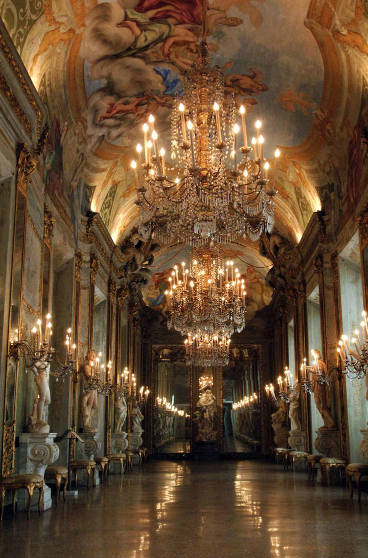
© Zenawiki, CC BY-SA 4.0 Resized from original. (This derivative is under the same CC BY-SA license.)
World Heritage Research
Discover scientific research and academic studies that deepen our understanding of Genoa: Le Strade Nuove and the system of the Palazzi dei Rolli from its history and significance to its conservation, management, and contemporary challenges.
-
A Digital Twin Approach Integrating IoT and AI for Monitoring and Assessing Roof Degradation in Historic Buildings
A groundbreaking digital platform, integrating IoT technologies and AI algorithms, has been developed to monitor and assess roof degradation in historic buildings. This innovative approach, piloted at the Albergo dei Poveri complex in Genoa, combines environmental monitoring, laser scanning, photogrammetry, HBIM models, and artificial intelligence to analyze degradation phenomena effectively. The platform demonstrates significant potential for enhancing decision-making processes in the conservation of extensive architectural heritage, offering a replicable methodology for planned maintenance and restoration interventions on historic buildings.
Valentini, M., Brotto, P., Campana, P., Capponi, M., Colli, M., Rapuzzi, A., Rosso, P., Zani, S., & Vecchiattini, R. (2026). A Digital Twin Approach Integrating IoT and AI for Monitoring and Assessing Roof Degradation in Historic Buildings. Intelligent Infrastructure and Construction, 2(1), 2. https://doi.org/10.3390/iic2010002
View Publication Record | Read Publication -
Participation and Spatial Analysis to make Cities Resilient to Climate Change. The Historic Center of Genoa
Historic urban centers, particularly vulnerable to climate change, require innovative adaptation strategies that integrate spatial analysis and stakeholder participation. This study introduces a participatory methodology developed under the EU-funded HERIT ADAPT project, which identifies multi-risk areas in historic contexts and co-designs interventions for climate resilience. Applied to Genoa's Historic Centre, the approach combines technological tools with official databases to analyze criticalities and propose replicable solutions. The methodology aims to be objective and generalizable, addressing gaps in research on stakeholder involvement in climate adaptation for heritage sites.
Bruno, F., Spadaro, I., Paoli, F., Poggio, B., & Pirlone, F. (2026). Participation and Spatial Analysis to make Cities Resilient to Climate Change. The Historic Center of Genoa. Contesti. Città, Territori, Progetti, 262–287. https://doi.org/10.36253/contest-16540
View Publication Record | Read Publication -
Imperfections and Scars: The Aesthetics of Curated Decay in Urban Conservation
Aesthetic imperfection and curated decay can enhance cultural memory and heritage value, challenging traditional conservation ethics that prioritize physical restoration. The study introduces an operational framework for urban conservation, grounded in the aesthetics of care, which distinguishes intentional aging from neglect. Through case studies—Albergo dei Poveri (Genoa) and Home for Cooperation (Nicosia)—it demonstrates how embracing patina, weathering, and structural decline preserves authenticity while fostering remembrance, resilience, and reconciliation. Methodologically, the research employs video essays to analyze decayed architectural environments, integrating theories like wabi-sabi, critical heritage studies, and cultural memory (Nora’s lieux de mémoire). This approach redefines heritage conservation as an act of care that supports future urban imaginaries.
Moldovan, I., Vaughan, C., O’Hara, M., Moldovan, S., & Cecălășan, I. (2026). Imperfections and Scars: The Aesthetics of Curated Decay in Urban Conservation. Heritage, 9(3), 105. https://doi.org/10.3390/heritage9030105
View Publication Record | Read Publication -
The Integration of Artificial Intelligence in Architectural Surveying and Cultural Heritage: Developments, Methodologies, and Perspectives of the Digital Twin
Advancements in artificial intelligence (AI) and digital twin technology are transforming architectural surveying and heritage conservation, offering precise, predictive, and prescriptive models for preserving built heritage. This research highlights the effectiveness of Machine Learning and Deep Learning algorithms—such as PointNet++ and DGCNN—in automatically recognizing architectural elements across diverse datasets, enabling semantic segmentation of point clouds and Heritage Building Information Modeling (HBIM). Case studies, including the In-Heritage platform for microclimate monitoring in Genoa’s Palazzi dei Rolli and the Aïoli platform for Notre-Dame de Paris’s post-disaster reconstruction, demonstrate AI’s potential to enhance conservation efforts. The study also addresses ethical challenges, algorithm interpretability, and the integration of immersive technologies (VR/AR), advocating for a transparent, data-driven approach to heritage protection.
Paduano, I. (2026). The Integration of Artificial Intelligence in Architectural Surveying and Cultural Heritage: Developments, Methodologies, and Perspectives of the Digital Twin. Journal of Architectural and Engineering Research, 10, 98–109. https://doi.org/10.54338/27382656-2026.10-08
View Publication Record | Read Publication -
Contribución de la actividad de la planta baja a la turistificación de espacios públicos. El Centro Histórico de Génova como caso de estudio
Research identifies four key areas in Genoa's historic center where ground-floor commercial activity drives public space touristification, revealing how commercial gentrification and privatization intersect. The study employs a novel methodology combining indicators to analyze the relationship between ground-floor activity and touristification at the unit of public space level, offering an integrated approach that transcends previous isolated analyses. This framework highlights the spatial dynamics of touristification in historic port cities, providing actionable insights for urban planning.
Conejo-Arrabal, F., Nebot-Gómez de Salazar, N., Rosa-Jiménez, C., & Gausa Navarro, M. (2025). Contribución de la actividad de la planta baja a la turistificación de espacios públicos. El Centro Histórico de Génova como caso de estudio. Ciudades, (28), 327–348. https://doi.org/10.24197/ciudades.28.2025.327-348
View Publication Record | Read Publication -
Relations between ground floor activity and the touristification of public spaces in historic port centres: three case studies of the Western Mediterranean Arc
Historic port centres in the Western Mediterranean are undergoing significant urban transformations due to touristification, with commercial gentrification and privatisation of public spaces reshaping these areas. This study introduces a comprehensive methodology to identify gentrified and touristified zones by analysing ground floor activities, franchising, and privatisation patterns. Applying this approach to Genoa (Italy), Málaga (Spain), and Nice (France)—cities with varying tourism pressures—researchers found distinct urban dynamics: Genoa shows signs of commercial dominance and early gentrification; Málaga exhibits extreme polarisation in commerce and catering, alongside intense privatisation; while Nice is marked by high catering activity and widespread public space privatisation. These findings underscore how ground floor use evolves under different tourism pressures, offering critical insights for sustainable urban development strategies.
Conejo-Arrabal, F., Nebot-Gómez de Salazar, N., Rosa-Jiménez, C., & Navarro, M. (2025). Relations between ground floor activity and the touristification of public spaces in historic port centres: three case studies of the Western Mediterranean Arc. European Journal of Tourism Research, 41, 4116. https://doi.org/10.54055/ejtr.v41i.4104
View Publication Record | Read Publication -
Il sistema palazzo-giardino nel tessuto urbano storico Genovese: Il caso di Palazzo Interiano Pallavicino a Genova
Palazzo Interiano Pallavicino in Genoa stands as a rare, fully preserved example of the historic 'palace-garden system,' offering insights into the perceptual dynamics between architectural volumes and green spaces from its design period. This study employs an interdisciplinary approach—combining historical, archival, bibliographic, iconographic sources with modern integrated survey techniques—to critically analyze the evolution, spatial distribution, and volumetric relationships within the palace and its garden. The investigation uncovers the intricate connections between the historic garden's layout and the architectural elements of the palace, including traditional Ligurian features like ninfeas, greenhouses, terraces, and complementary structures. By contextualizing these findings within the socio-cultural landscape of 16th-century Genoa, the research sheds light on the historical significance and enduring legacy of this UNESCO World Heritage Site component.
Martina Castaldi. (2024). Il sistema palazzo-giardino nel tessuto urbano storico Genovese: Il caso di Palazzo Interiano Pallavicino a Genova. Misura / Dismisura | Measure / out of Measure. https://doi.org/10.3280/oa-1180-c528
View Publication Record | Read Publication