World Heritage Identification Number: 39
World Heritage since: 1979
Category: Mixed Cultural Heritage and Natural Heritage
WHE Type: Protected Areas & National Parks
Transboundary Heritage: No
Endangered Heritage: No
Country: 🇹🇿 United Republic of Tanzania
Continent: Africa
UNESCO World Region: Africa
Map
Ngorongoro Conservation Area: A Unique Blend of Wildlife, Culture, and History
The Ngorongoro Conservation Area, located in the Crater Highlands region of northeastern Tanzania, is a remarkable testament to the harmonious coexistence of diverse ecosystems, abundant wildlife, rich cultural heritage, and significant historical artifacts. Inscribed as a UNESCO World Heritage Site in 1979 and later recognized for its cultural significance in 2010, this expansive protected area offers a unique blend of natural beauty, wildlife spectacles, and human history that captivates visitors from around the globe.
Covering an area of approximately 8,292 square kilometers, the Ngorongoro Conservation Area encompasses a wide range of landscapes, from highland plains and savannas to savanna woodlands and forests. Its most iconic feature is the Ngorongoro Crater, one of the world’s largest intact and unfilled volcanic calderas, measuring about 20 kilometers in diameter and over 600 meters deep. This breathtaking geological formation provides a sanctuary for a staggering array of wildlife, making it a must-visit destination for nature enthusiasts.
The dramatic landscape of the Ngorongoro Crater owes its origin to a massive volcanic eruption and subsequent collapse approximately 2 to 3 million years ago. Once a towering volcano comparable in scale to Mount Kilimanjaro, the structure imploded to form the caldera seen today. Over time, natural processes created a self-contained ecosystem within the crater, complete with grasslands, freshwater springs, and a soda lake, all of which support its remarkable concentration of wildlife.
The crater's diverse habitats support a dense population of wildlife, including the Big Five – lion, elephant, buffalo, rhino, and leopard – as well as numerous other species such as hyenas, cheetahs, zebras, wildebeests, and gazelles. Unlike the famous Great Migration of the Serengeti National Park ecosystem, much of the wildlife within the crater is largely resident year-round, contributing to consistently excellent game viewing. The Ngorongoro Conservation Area is also renowned for its birdlife, boasting over 500 recorded bird species, ranging from eagles and vultures to storks and flamingos.
Ecologically, the conservation area forms an integral part of the greater Serengeti ecosystem. While the crater itself sustains largely resident animal populations, the surrounding plains serve as vital corridors for seasonal wildlife movements. The area also acts as a critical refuge for threatened species, including the endangered Black rhinoceros, and supports one of the highest densities of large predators in Africa, further underscoring its global conservation significance.
The property's significance extends beyond its natural riches, as it also holds a wealth of archaeological and anthropological treasures. Olduvai Gorge, located within the conservation area, is one of the most important paleoanthropological sites in the world. Nearby, at Laetoli, early hominid footprints dating back approximately 3.6 million years have provided invaluable insights into human evolution and early human-environment interactions.
A defining, yet complex, feature of the Ngorongoro Conservation Area is its relationship with the Maasai people, who have lived in harmony with the land for centuries. The area was established in 1959 as a multiple land-use area, allowing the Maasai to continue their traditional livestock grazing practices alongside wildlife conservation efforts. However, this relationship has become increasingly strained.
Managed by the Ngorongoro Conservation Area Authority (NCAA), the region faces mounting pressures from population growth, increased tourism, and environmental change. In addition, human rights organizations and international observers have raised concerns over policies affecting Maasai communities, including restrictions on land use and access to essential services. Rights groups have criticized these measures as forms of displacement linked to conservation and tourism priorities, while government authorities maintain that such actions are necessary to protect the ecological integrity of the area.
In recent years, the "multiple land-use" model has faced its most severe test to date, drawing significant international criticism. As of 2026, United Nations human rights experts and human rights organizations like Survival International have intensified calls for the Tanzanian government to halt the forced relocation of over 80,000 Maasai residents. Critics allege that the government has used conservation as a pretext to clear the land for luxury tourism, reportedly restricting access to vital health services, schools, and grazing lands to pressure the community into leaving.
The Maasai International Solidarity Alliance (MISA) has issued a call for the Ngorongoro Conservation Area to be delisted as a UNESCO World Heritage Site. Indigenous leaders argue that the UNESCO designation has been weaponized by the state to justify displacement, prioritizing international conservation status over the human rights of the land’s original custodians. UN Special Rapporteurs have urged the government to honor its 1959 commitments, asserting that the protection of biodiversity must not come at the cost of the Maasai’s cultural and physical survival.
Overall, the Ngorongoro Conservation Area remains one of the most extraordinary landscapes on Earth—distinguished not only by its natural beauty and ecological richness but also by its deep historical roots and living cultural traditions. Its World Heritage status reflects its global importance, while its evolving management highlights the ongoing challenge of balancing conservation with human rights, dignity, and resilience in a changing world.
UNESCO Description of the World Heritage Site
The Ngorongoro Conservation Area spans vast expanses of highland plains, savanna, savanna woodlands and forests. Established in 1959 as a multiple land use area, with wildlife coexisting with semi-nomadic Maasai pastoralists practicing traditional livestock grazing, it includes the spectacular Ngorongoro Crater, the world’s largest caldera. The property has global importance for biodiversity conservation due to the presence of globally threatened species, the density of wildlife inhabiting the area, and the annual migration of wildebeest, zebra, gazelles and other animals into the northern plains. Extensive archaeological research has also yielded a long sequence of evidence of human evolution and human-environment dynamics, including early hominid footprints dating back 3.6 million years.
UNESCO Justification of the World Heritage Site
Criterion (iv): Ngorongoro Conservation Area has yielded an exceptionally long sequence of crucial evidence related to human evolution and human-environment dynamics, collectively extending from four million years ago to the beginning of this era, including physical evidence of the most important benchmarks in human evolutionary development. Although the interpretation of many of the assemblages of Olduvai Gorge is still debatable, their extent and density are remarkable. Several of the type fossils in the hominin lineage come from this site. Furthermore, future research in the property is likely to reveal much more evidence concerning the rise of anatomically modern humans, modern behavior and human ecology.
Criterion (vii): The stunning landscape of Ngorongoro Crater combined with its spectacular concentration of wildlife is one of the greatest natural wonders of the planet. Spectacular wildebeest numbers (well over 1 million animals) pass through the property as part of the annual migration of wildebeest across the Serengeti ecosystem and calve in the short grass plains which straddle the Ngorongoro Conservation Area/Serengeti National Park boundary. This constitutes a truly superb natural phenomenon.
Criterion (viii): Ngorongoro crater is the largest unbroken caldera in the world. The crater, together with the Olmoti and Empakaai craters are part of the eastern Rift Valley, whose volcanism dates back to the late Mesozoic / early Tertiary periods and is famous for its geology. The property also includes Laetoli and Olduvai Gorge, which contain an important palaeontological record related to human evolution.
Criterion (ix): The variations in climate, landforms and altitude have resulted in several overlapping ecosystems and distinct habitats, with short grass plains, highland catchment forests, savanna woodlands, montane long grass plains and high open moorlands. The property is part of the Serengeti ecosystem, one of the last intact ecosystems in the world which harbours large and spectacular animal migrations.
Criterion (x): Ngorongoro Conservation Area is home to a population of some 25,000 large animals, mostly ungulates, alongside the highest density of mammalian predators in Africa including the densest known population of lion (estimated 68 in 1987). The property harbours a range of endangered species, such as the Black Rhino, Wild hunting dog and Golden Cat and 500 species of birds. It also supports one of the largest animal migrations on earth, including over 1 million wildebeest, 72,000 zebras and c.350,000 Thompson and Grant gazelles.
Encyclopedia Record: Ngorongoro Conservation Area
Ngorongoro Conservation Area is a protected area and a UNESCO World Heritage Site located in Ngorongoro District, 180 km (110 mi) west of Arusha City in Arusha Region, within the Crater Highlands geological area of northeastern Tanzania. The area is named after Ngorongoro Crater, a large volcanic caldera within the area. The Ngorongoro Conservation Area Authority (NCAA), which administers the Ngorongoro Conservation Area (NCA), is an arm of the Tanzanian government and its boundaries follow the boundary of the Ngorongoro District in the Arusha Region. The western portion of the park abuts the Serengeti National Park (SNP). The area comprising the NCA, SNP, and Kenya's Maasai Mara game reserve is home to Great Migration, a massive annual migration of millions of wildebeest, zebras, gazelles, and other animals. The NCA also contains Olduvai Gorge, one of the most important paleoanthropological sites in the world.Additional Site Details
Area: 809,440 hectares
Number of Components: 1
(vii) — Contains superlative natural phenomena or beauty
(viii) — Outstanding example representing major earth stages
(ix) — Outstanding example representing ecological and biological processes
(x) — Contains most important habitats for biodiversity
Coordinates: -3.18722 , 35.54083
Image
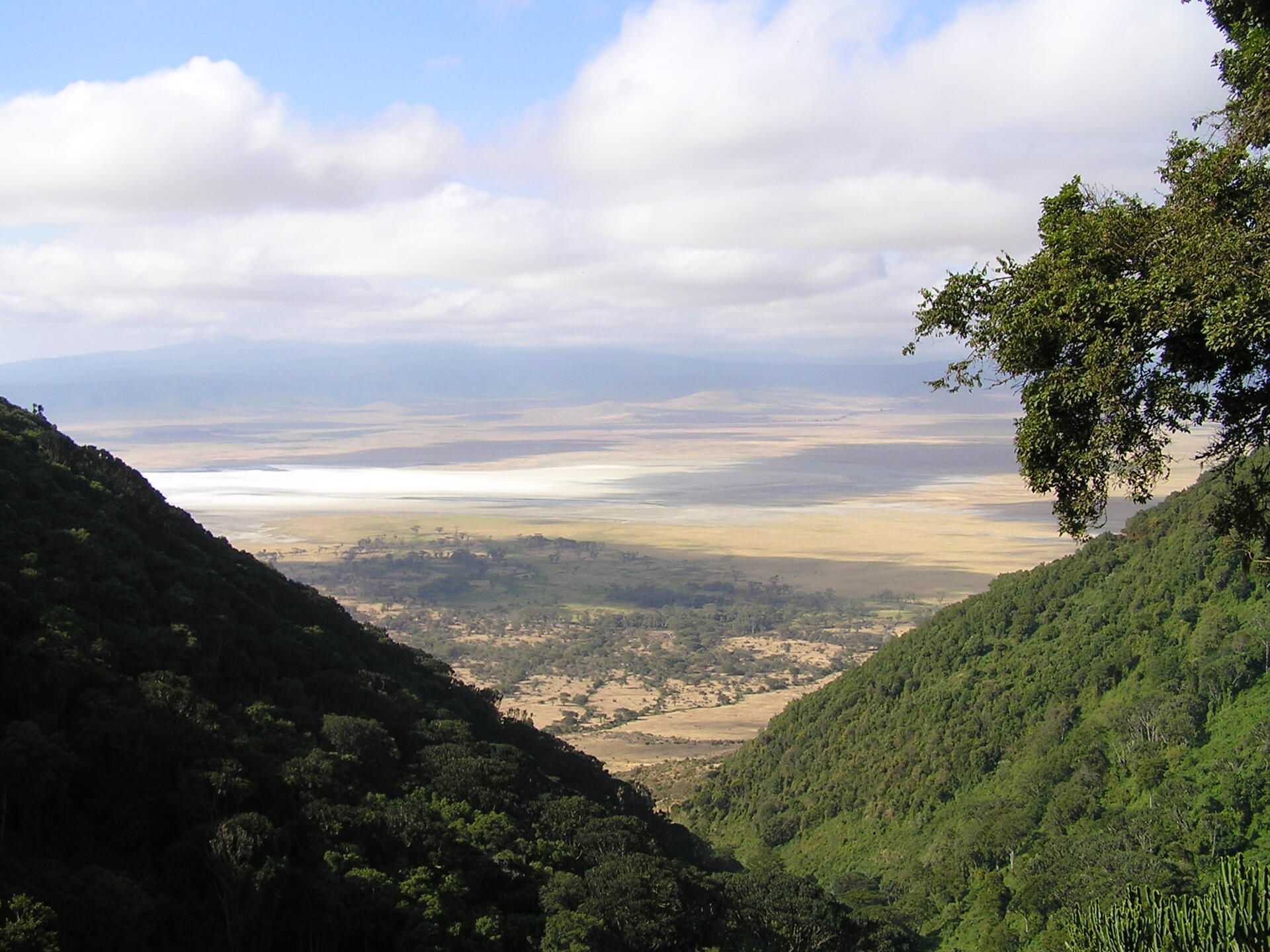
© Jantjeerkamp at Dutch Wikipedia, CC BY-SA 3.0 Resized from original. (This derivative is under the same CC BY-SA license.)
World Heritage Research
Discover scientific research and academic studies that deepen our understanding of Ngorongoro Conservation Area from its history and significance to its conservation, management, and contemporary challenges.
-
3 Compatibility of Pastoralism and Conservation? A Test Case Using Integrated Assessment in the Ngorongoro Conservation Area, Tanzania
Pastoralism and conservation can coexist effectively within the Ngorongoro Conservation Area, Tanzania, as demonstrated by an integrated assessment approach. The study found that sustainable livestock management practices, combined with conservation efforts, can mitigate negative impacts on biodiversity while supporting local livelihoods. Researchers used a multi-disciplinary method, including ecological data analysis, socioeconomic surveys, and participatory assessments, to evaluate the compatibility of pastoralism with conservation goals. This approach provides a model for balancing human activities and environmental protection in protected areas.
Galvin, K. A., Ellis, J., Boone, R. B., Magennis, A. L., Smith, N. M., Lynn, S. J., & Thornton, P. (2022). 3 Compatibility of Pastoralism and Conservation? A TEST CASE USING INTEGRATED ASSESSMENT IN THE NGORONGORO CONSERVATION AREA, TANZANIA. Conservation and Mobile Indigenous Peoples, 36–60. https://doi.org/10.1515/9781782381853-007
View Publication Record | Read Publication -
Making land grabbable: Stealthy dispossessions by conservation in Ngorongoro Conservation Area, Tanzania
Land grabbing in conservation areas, such as Tanzania's Ngorongoro Conservation Area, is not an abrupt event but a result of long-term structural marginalization that makes local populations relocatable. This study reveals how systematic disinvestment in social services and restrictive production practices create conditions where 'voluntary' relocation becomes justified, often leading to stealthy dispossessions. Unlike traditional analyses focusing on major land-grabbing events, this research emphasizes the precursor processes of marginalization that pave the way for such dispossessions. By analyzing policy and practice in Ngorongoro, it provides a framework for understanding similar cases where large tracts of ostensibly empty land are made available for investment, offering insights applicable beyond Africa.
Weldemichel, T. G. (2021). Making land grabbable: Stealthy dispossessions by conservation in Ngorongoro Conservation Area, Tanzania. Environment and Planning E: Nature and Space, 5(4), 2052–2072. https://doi.org/10.1177/25148486211052860
View Publication Record | Read Publication -
Rainfall variability and socio-economic constraints on livestock production in the Ngorongoro Conservation Area, Tanzania
Pastoralists in the Ngorongoro Conservation Area (NCA), Tanzania, face significant challenges due to rainfall variability and socio-economic constraints. Despite their awareness of climate change impacts—such as erratic rainfall and prolonged droughts—increasing herd sizes and mobility paradoxically intensify cattle losses by 10% and 98%, respectively. These findings challenge the assumption that larger herds or greater mobility cushion households against climate shocks. The study combined household interviews, Participatory Rural Appraisal (PRA), and archived data to reveal that rainfall accounts for only 32–46% of variability in livestock populations. Recommendations emphasize enhancing adaptive capacity through targeted interventions and further research into the profitability of pastoral cattle production under changing conditions.
Leweri, C. M., Msuha, M. J., & Treydte, A. C. (2021). Rainfall variability and socio-economic constraints on livestock production in the Ngorongoro Conservation Area, Tanzania. SN Applied Sciences, 3(1). https://doi.org/10.1007/s42452-020-04111-0
View Publication Record | Read Publication -
Climate change risks on protected areas ecotourism: shocks and stressors perspectives in Ngorongoro Conservation Area, Tanzania
Protected areas worldwide, including UNESCO World Heritage Sites, face significant risks from climate change due to their high dependence on natural ecosystems and climate conditions. A study conducted between 2012 and 2014 in the Ngorongoro Conservation Area, Tanzania, identified key climate-related shocks—such as recurrent droughts, political unrest, global terrorism, and disease outbreaks—and stressors like water shortages, vegetation changes, biodiversity loss, and increased livestock and human diseases. These findings highlight the vulnerability of ecotourism in protected areas to climate change, providing a foundation for further vulnerability assessments and adaptation strategies. The research used focus group discussions and semi-structured interviews to gather data on stakeholders' awareness and perceptions of climate change, offering critical insights for conservation and tourism planning.
Mkiramweni, N. P., DeLacy, T., Jiang, M., & Chiwanga, F. E. (2016). Climate change risks on protected areas ecotourism: shocks and stressors perspectives in Ngorongoro Conservation Area, Tanzania. Journal of Ecotourism, 15(2), 139–157. https://doi.org/10.1080/14724049.2016.1153645
View Publication Record | Read Publication -
Will Ngorongoro Conservation Area remain a world heritage site amidst increasing human footprint?
The Ngorongoro Conservation Area (NCA), a UNESCO World Heritage Site and Biosphere Reserve, faces significant ecological threats due to rapid human population growth, diversified livelihoods, and increasing tourism. Research indicates a 5.6% annual population growth rate and a 1.1% rise in livestock numbers, alongside a 46% increase in cropland, which has led to the decline of grasslands and natural forests. These changes are contributing to wildlife population declines and ecosystem transformation. The study also highlights tensions between the Maasai community and the NCA Authority (NCAA) over land use restrictions, as well as rising tourism pressures. Without effective management measures, the future of the NCA's unique ecosystem—and its World Heritage status—is at risk.
Catherine, A. M., Revocatus, M., & Hussein, S. (2015). Will Ngorongoro Conservation Area remain a world heritage site amidst increasing human footprint? International Journal of Biodiversity and Conservation, 7(9), 394–407. https://doi.org/10.5897/ijbc2015.0837
View Publication Record | Read Publication -
The Impact of Tourism Revenue on the Local Communities’ Livelihood: A Case Study of Ngorongoro Conservation Area, Tanzania
Tourism revenue directed to Maasai pastoralist communities in the Ngorongoro Conservation Area (NCA) has shown economic benefits, yet many residents remain unaware of its potential. This study, based on surveys of 119 Maasai and 39 NCA employees, reveals that while tourism contributes to local livelihoods, its impact is limited by low awareness among community members. The research highlights the need for better communication and integration of tourism revenue into existing income sources to maximize economic development in conservation areas.
Melita, A. W., & Mendlinger, S. (2013). The Impact of Tourism Revenue on the Local Communities’ Livelihood: A Case Study of Ngorongoro Conservation Area, Tanzania. Journal of Service Science and Management, 06(01), 117–126. https://doi.org/10.4236/jssm.2013.61012
View Publication Record | Read Publication